Table of Contents
- Why the First Hour Defines Your Liability Exposure
- Why DIY Board-Up Is a Liability Trap (And What Courts Expect Instead)
- How Thorough Documentation Protects You in Claims and Court
- From Board-Up to Beautiful: Streamlining Your Glass Replacement
- From Reactive to Proactive: Upgrades That Deter Crime and Reduce Damage
- Key Takeaways
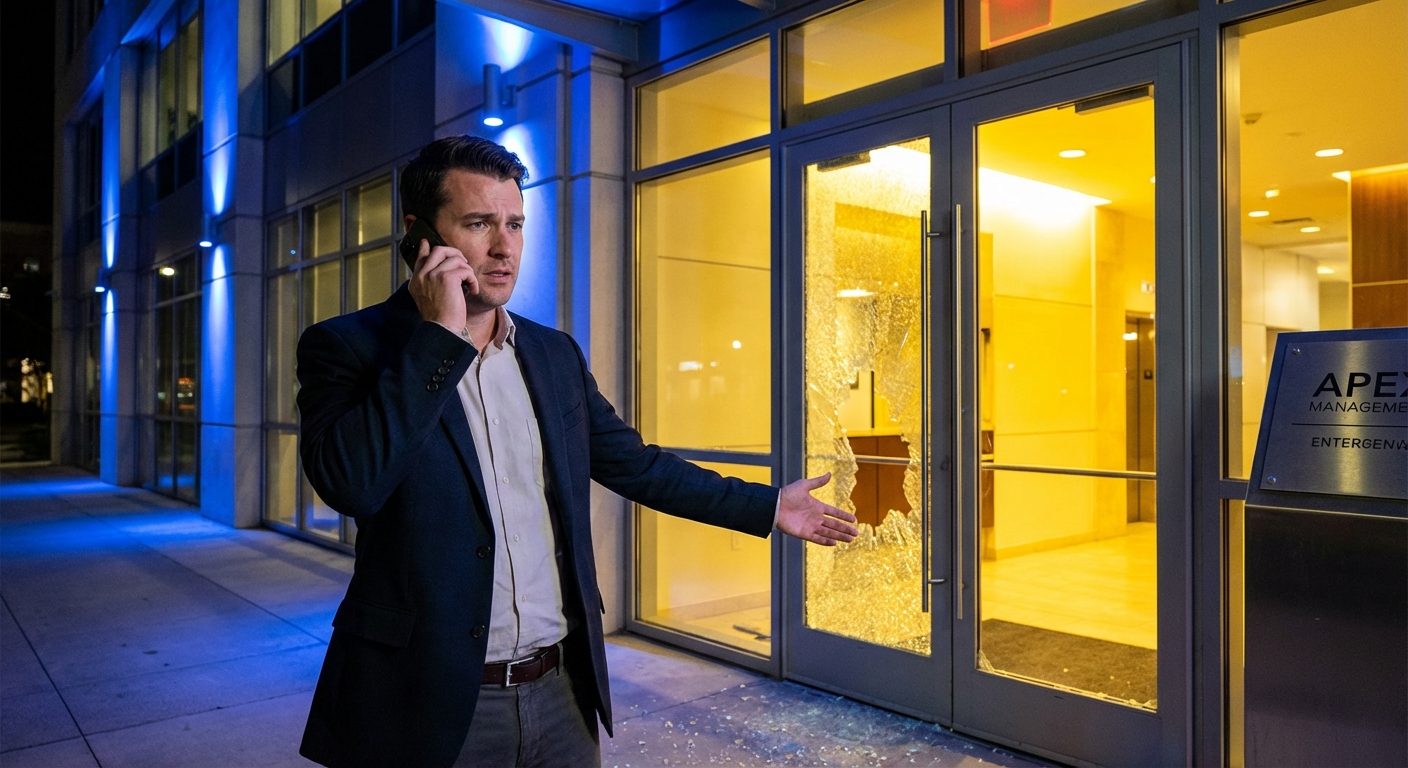
A 3 a.m. phone call. Shattered glass in your building’s main entrance. An angry tenant. A wide-open security breach. For property and apartment managers, this scenario isn’t just stressful—it’s a critical liability moment that demands immediate, strategic action.
Vandalism and property crimes cost U.S. businesses and property owners billions annually, with broken windows being one of the most common entry points for unauthorized access. In 2022 alone, the FBI reported nearly 965,373 burglaries across the nation, with commercial and multi-family properties accounting for a significant percentage of these incidents. Your response in the first 60 minutes can be the difference between a contained incident and a cascade of injuries, theft, legal exposure, and insurance complications.
This comprehensive guide provides property managers with a structured, evidence-based emergency response plan for glass and window damage—from immediate safety protocols and professional board-up services to documentation best practices and long-term prevention strategies. Whether you’re managing a downtown apartment complex or a suburban office building, this checklist will help you protect tenants, secure your property, and fulfill your legal duty of care with confidence.
Why the First Hour Defines Your Liability Exposure
The immediate response to broken glass isn’t just about cleanup—it’s about preventing injuries, securing the breach, and establishing a defensible response for insurance and legal purposes. The Institute of Real Estate Management emphasizes that controlling the emergency scene is the foundation of any property crisis response.
Immediate Safety Protocols
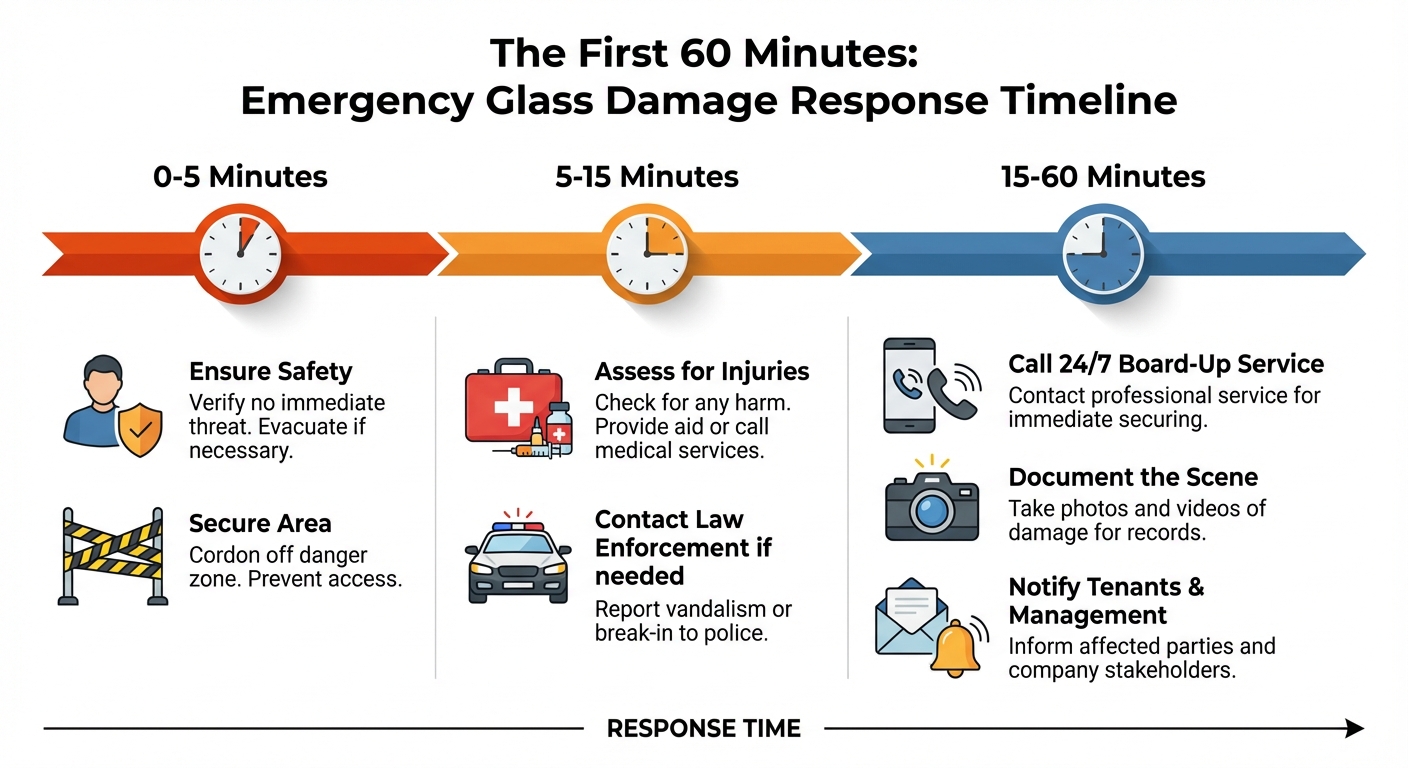
Your first priority is always human safety. The moment you receive notification of glass damage, take these critical steps:
Isolate the affected area immediately using caution tape or physical barriers to prevent tenant, employee, or pedestrian injuries. A cordoned-off zone protects people from razor-sharp glass fragments and prevents well-meaning individuals from attempting unsafe cleanup.
Assess for injuries and contact 911 if anyone is hurt. Even minor cuts from broken glass can require medical attention, and documenting injuries properly is essential for insurance and liability purposes.
OSHA-Compliant Cleanup Standards
If your staff handles any glass removal, they must wear proper Personal Protective Equipment (PPE): safety glasses with side shields, puncture-resistant gloves, and hard-soled shoes. These requirements aren’t suggestions—they’re OSHA mandates designed to prevent serious workplace injuries.
For large breaks or complex damage, waiting for trained professionals is safer and reduces your liability exposure. Professional cleanup teams understand proper disposal procedures, use industrial-grade equipment, and carry insurance that protects you if something goes wrong during the process.
Security Assessment—Vandalism vs. Break-In
A broken window is a direct invitation for theft, secondary vandalism, or unauthorized entry. Your security assessment should begin immediately:
Contact law enforcement immediately if a crime is suspected. A police report is essential for insurance claims and provides an official incident record. The FBI’s crime statistics reveal that properties with documented incidents receive faster insurance processing and stronger legal protection.
Instruct staff and tenants not to touch or disturb the scene to preserve potential evidence. Fingerprints, tool marks, and scattered debris can help investigators identify perpetrators and strengthen your case for reimbursement or prosecution.
The Professional Board-Up Call
Contact a licensed, insured 24/7 emergency board-up service within the first 15 minutes of assessing the damage. A professional service can often arrive while you’re still managing on-site logistics, significantly reducing your window of vulnerability.
At Town & Country Glass, we understand that property managers need immediate response. Our emergency board-up service operates around the clock, ensuring your property is secured quickly and professionally—not with plywood and hope, but with proper materials and techniques that actually protect your building.
Why DIY Board-Up Is a Liability Trap (And What Courts Expect Instead)
Property managers have a legal “duty of care” to maintain safe premises. An inadequate board-up isn’t just unprofessional—it’s a potential source of negligence that can lead to devastating lawsuits and denied insurance claims.
Understanding Premises Liability
Property owners and their agents (managers) are legally obligated to maintain reasonably safe conditions for tenants and visitors. If a subsequent injury or theft occurs due to an inadequate or delayed repair, courts can hold the property owner liable under premises liability law.
The “reasonable person” standard applies here: What would a competent, professional property manager do in this situation? Hiring a licensed, insured board-up service is the industry-recognized standard. Trying to save a few dollars with a DIY approach can cost you tens of thousands in liability claims.
Insurance Policy Requirements
Many commercial property insurance policies include clauses requiring policyholders to take “reasonable steps” to mitigate further damage after an incident. An improper DIY board-up that leads to water damage, mold, or subsequent theft can provide grounds for insurers to dispute or deny portions of your claim.
Insurance adjusters review your emergency response as part of their assessment. A professional board-up demonstrates that you took the incident seriously and followed industry best practices. A sheet of plywood with visible gaps? That’s evidence of inadequate mitigation.
DIY vs. Professional Board-Up: A Risk Comparison
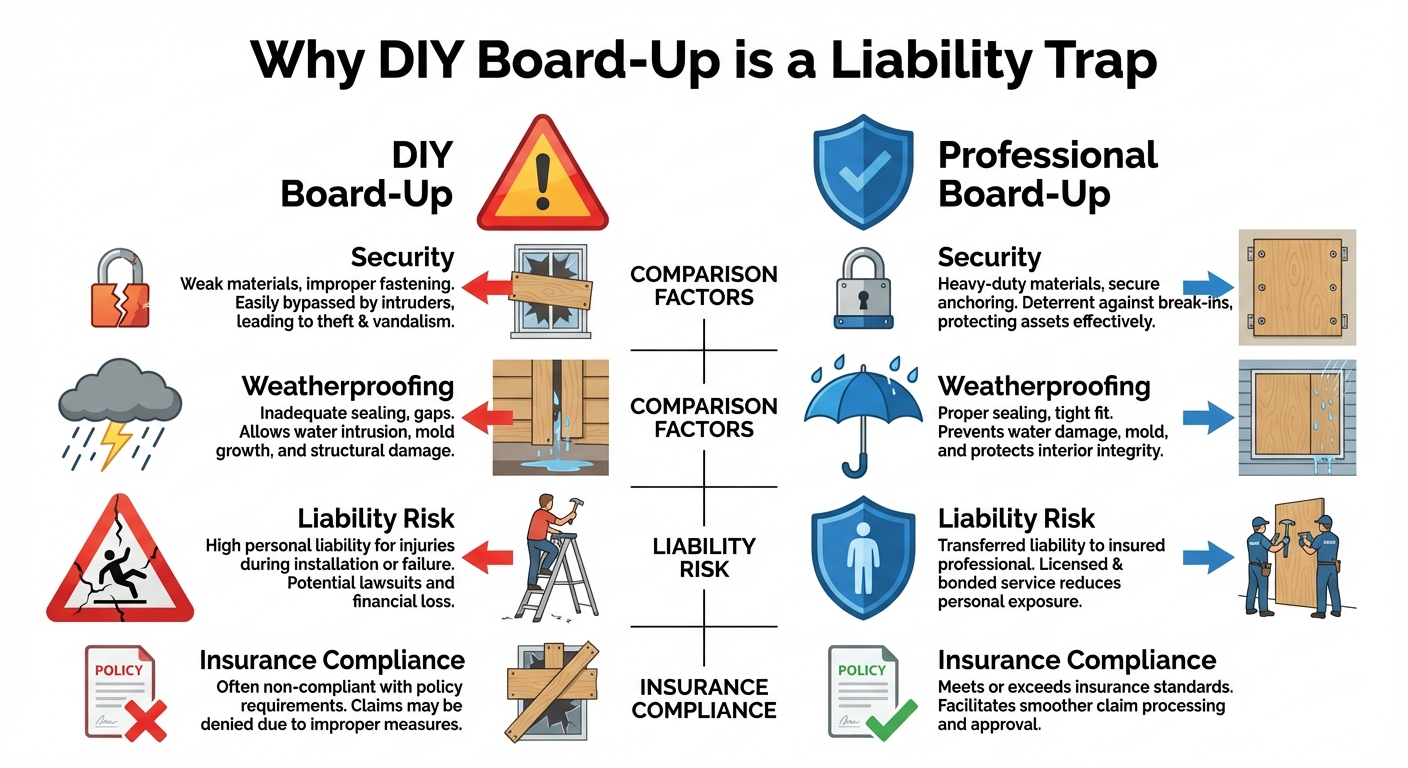
The differences in security, weather resistance, and liability protection between DIY and professional solutions are stark:
Security: DIY boards are typically attached with exterior screws that can be easily removed with a screwdriver. Professional installations use interior-mounted carriage bolts or specialized fasteners that require significant force and tools to remove from outside.
Weather Protection: Gaps in DIY installations allow rain, wind, and pests to enter, causing secondary water damage and potential mold issues. Professional board-ups include precision cutting, weather stripping, and proper sealing to create a weatherproof barrier.
Liability Risk: A poorly installed board that falls and causes injury represents clear negligence. Professional services carry liability insurance that protects you if anything goes wrong during or after installation.
Insurance Compliance: DIY installations may not meet local code requirements or insurance policy terms, potentially jeopardizing your claim. Professional services understand and comply with both local regulations and carrier standards.
Tenant Perception: A sloppy DIY board signals neglect and can erode tenant confidence in your management. A clean, professional installation demonstrates competence and care for tenant safety.
The cost difference between DIY and professional board-up is minimal compared to the potential liability exposure. One denied insurance claim or premises liability lawsuit will cost exponentially more than hiring the right professionals from the start.
How Thorough Documentation Protects You in Claims and Court
Your camera is your best legal defense. Comprehensive documentation and proactive tenant communication can make or break an insurance claim and protect you from liability disputes.
The Photo/Video Documentation Checklist
Take high-resolution photos and videos from multiple angles immediately upon discovering the damage. The Insurance Information Institute emphasizes that immediate, detailed documentation is critical for smooth claims processing.
Document these critical elements:
- The broken glass itself (wide shots showing context and close-ups showing detail)
- The point of entry and any tool marks or evidence of forced entry
- Surrounding property damage (walls, frames, floor debris)
- The state of the area before cleanup begins
- The professional board-up installation process and final result
- Before and after shots showing the progression from damage to temporary security
Store documentation in multiple locations: Upload immediately to cloud storage, email copies to yourself and your insurance carrier, and maintain a backup on a physical device. Digital files can be corrupted or lost—redundancy is essential.
Time-stamped photos and videos create an undeniable record of when you discovered the damage and how quickly you responded. This timeline becomes crucial evidence if your response is questioned by insurers, attorneys, or investigators.
Tenant Communication Best Practices
Send formal notifications (email, text, tenant portal) within the first hour of the incident. Clear, proactive communication reduces tenant anxiety and demonstrates management competence—critical factors in tenant retention and reputation management.
Your notification should include:
- What happened: “At approximately 2:30 AM, vandals broke the glass door in the main lobby entrance.”
- Immediate steps being taken: “A licensed emergency board-up service is securing the property now. Law enforcement has been notified and a report has been filed.”
- Estimated timeline: “Permanent glass replacement is scheduled for [date]. We expect the repair to be completed within [timeframe].”
- Safety instructions: “Please use the south entrance until further notice. Do not approach the damaged area.”
- Contact information: “If you have questions or concerns, please contact [name] at [phone] or [email].”
This level of communication demonstrates professionalism and keeps tenants informed, reducing the likelihood of complaints, poor reviews, or lease non-renewals due to perceived negligence.
Insurance Carrier Notification
Initiate your claim as soon as the area is secured and documented. Provide your insurance carrier with:
- Police report number (if applicable)
- Complete photo/video documentation
- Details of the professional board-up service used (company name, license number, invoice)
- A detailed timeline of your response from discovery through temporary security
- Any relevant correspondence with tenants or authorities
Early, thorough communication with your carrier can significantly expedite claim approval and payment. Insurance companies reward property managers who demonstrate organized, professional emergency response protocols.
From Board-Up to Beautiful: Streamlining Your Glass Replacement
Once the immediate crisis is contained, efficient coordination with your glass replacement provider ensures minimal downtime and tenant disruption.
Information to Gather for Accurate Quotes
Having complete information ready when you contact your glass company can cut quote turnaround time in half:
Essential measurements and specifications:
- Approximate or exact measurements (width × height)
- Type of glass (single pane, double pane/insulated, tempered, laminated, low-E coating)
- Frame material (vinyl, aluminum, wood, steel)
- Location and accessibility (ground floor vs. upper story, interior vs. exterior access)
- Any special features (tinting, security film, decorative elements)
Visual documentation:
- Photos of the intact frame
- Images of broken glass remnants (these often reveal the original glass type)
- Surrounding area context shots
- Building exterior showing access points for installers
This information allows glass professionals to provide accurate quotes and order the correct materials without requiring multiple site visits, accelerating your repair timeline.
Working with Your Glass Provider
Request a detailed written quote that specifies materials, labor, timeline, and warranty coverage. Transparency at this stage prevents disputes and ensures you understand exactly what you’re paying for.
For commercial properties, ask about:
- After-hours or weekend installation to minimize business disruption
- Coordination with the board-up service (if the same company provides both services)
- Upgrade options (tempered glass, laminated glass, security film)
- Long-term maintenance recommendations
At Town & Country Glass, we understand that commercial and multi-family properties operate 24/7. We offer flexible scheduling to minimize disruption to your tenants and can coordinate seamlessly from emergency board-up through final glass installation.
Final Inspection Protocol
Once installation is complete, conduct a thorough walkthrough before signing off on the work:
Check for:
- Proper sealing around the entire perimeter (no visible gaps)
- Smooth operation (for doors and operable windows)
- Complete removal of installation debris and protective coverings
- Glass specifications match your approved quote
- Professional appearance consistent with surrounding windows
Document the completed work with photos for your property records. This final documentation closes the loop on your incident response and provides evidence that you restored the property to proper condition.
From Reactive to Proactive: Upgrades That Deter Crime and Reduce Damage
While not all incidents are preventable, strategic property improvements can significantly reduce the frequency and severity of glass damage.
Upgrading Your Glazing Materials
Security Window Film
Applied security film makes glass substantially harder to shatter, delaying or deterring forced entry attempts. When broken, film holds glass fragments together—reducing injury hazards and maintaining a physical barrier even after impact.
Security film is a cost-effective upgrade for ground-floor windows and high-risk areas. It won’t stop a determined intruder indefinitely, but it buys valuable time for alarms to trigger and authorities to respond.
Safety Glass Options
Different types of safety glass provide varying levels of protection for different applications:
Tempered Glass is heat-treated to be 4-5 times stronger than standard glass. When it does break, it shatters into small, dull pieces instead of sharp shards, significantly reducing injury risk. It’s ideal for doors, large windows, and areas prone to accidental impact. However, tempered glass doesn’t provide security against forced entry—it’s designed for safety, not security.
Laminated Glass consists of multiple glass layers with a plastic interlayer (typically PVB). When broken, glass fragments adhere to the interlayer, holding the pane together. This creates a barrier that remains intact even after the glass is shattered, making it excellent for security applications, blast resistance, sound reduction, and UV protection.
For ground-floor commercial spaces or properties in high-crime areas, laminated glass represents a smart long-term investment. The upfront cost is higher than standard glass, but the reduction in break-ins, vandalism, and emergency repairs often provides positive ROI within a few years.
Crime Prevention Through Environmental Design (CPTED)
CPTED is a proven approach to reducing crime through strategic property design and maintenance. Property managers can implement these principles without major renovations:
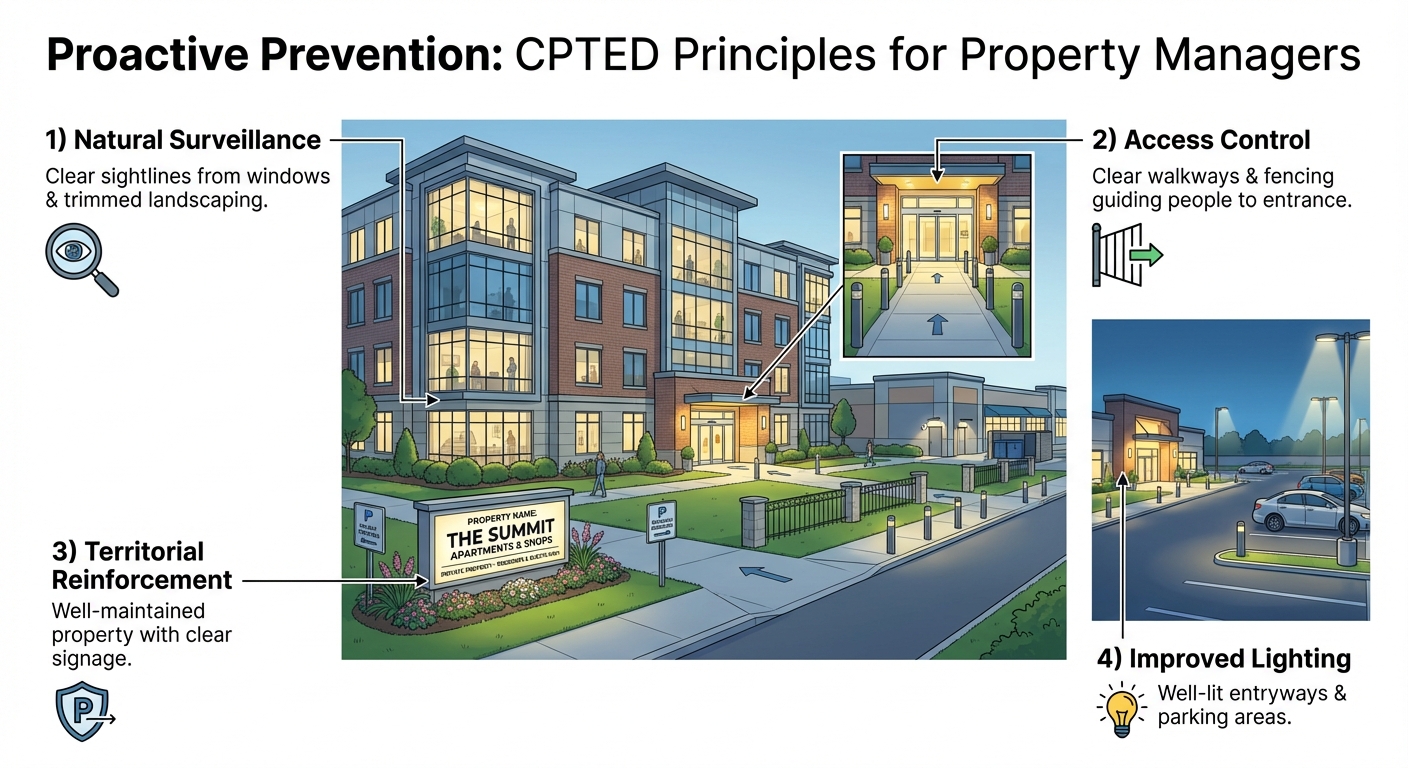
Natural Surveillance: Keep windows and entrances visible from streets, neighboring properties, and high-traffic areas. Trim landscaping that provides concealment for criminals. Vandals and burglars avoid targets where they’re easily observed.
Improved Lighting: The U.S. Department of Justice reports that effective lighting significantly reduces crime by increasing offender detection risk. Ensure all entry points, parking lots, and walkways are well-lit. Motion-activated lights can startle intruders and alert occupants to suspicious activity.
Territorial Reinforcement: Well-maintained properties with clear signage suggest active management and deter vandalism. Properties that look neglected or poorly monitored become magnets for crime. Regular maintenance, fresh paint, and visible property boundaries communicate that the property is watched and cared for.
Access Control: Use landscaping and fencing to guide people to designated entry points, making unauthorized access more conspicuous. Clear pathways and controlled access points make it easier to monitor who enters and exits your property.
Building an Emergency Response Plan
The time to establish relationships with glass and emergency service providers is before disaster strikes:
- Pre-vet and document emergency contacts: Identify licensed, insured board-up and glass companies that offer 24/7 service in your area
- Verify credentials: Request certificates of insurance and licensing documentation before an emergency occurs
- Keep emergency contact information accessible: Digital and physical copies should be available to all management staff
- Conduct annual reviews: Update your emergency protocols and contact lists annually, verifying that service providers are still in business and properly licensed
Property managers who establish these relationships proactively respond faster and more effectively when emergencies occur. You’ll already know who to call, what to expect, and that the company will deliver professional results.
Key Takeaways
Emergency glass damage is an inevitable reality of property management, but your response doesn’t have to be chaotic or legally risky. By following a structured, professional checklist—prioritizing immediate safety, engaging licensed board-up services, documenting everything thoroughly, and communicating proactively with tenants and insurers—you transform a crisis into a manageable incident that protects both people and property value.
The difference between a contained emergency and a catastrophic liability claim often comes down to those first 60 minutes and the quality of the professionals you call. Establishing relationships with experienced, 24/7 glass and emergency services providers before you need them isn’t just smart risk management—it’s a core component of fulfilling your legal duty of care to tenants and property owners.
Finally, strategic investments in safety glass, security film, and CPTED-based property improvements can dramatically reduce both the frequency and severity of future incidents, providing long-term protection for your buildings and the people who depend on them.
Don’t Wait for the 3 a.m. Emergency Call
Review your current emergency response plan, verify your glass service provider offers 24/7 board-up, and ensure your team knows exactly who to call when—not if—the next incident occurs.
Discuss emergency service options and proactive glass upgrades that protect your property investment.
References:
- Institute of Real Estate Management (IREM). (2022). Preparing for the Unexpected: A Guide to Emergency Preparedness. https://www.irem.org/learning/emergency-preparedness
- Occupational Safety and Health Administration (OSHA). (n.d.). Personal Protective Equipment: 1910.132 – General Requirements. U.S. Department of Labor. https://www.osha.gov/laws-regs/regulations/standardnumber/1910/1910.132
- Cornell Law School Legal Information Institute. (n.d.). Premises Liability. https://www.law.cornell.edu/wex/premises_liability
- The Hartford. (2021). Business Property Insurance and Premises Liability. Risk Management Guide. https://www.thehartford.com/business-insurance/premises-liability
- Insurance Information Institute. (2023). Tips for a smoother claims process. https://www.iii.org/article/tips-smoother-claims-process
- International Window Film Association (IWFA). (n.d.). Safety & Security Window Film. https://iwfa.com/consumer-information/safety-security-window-film
- U.S. Consumer Product Safety Commission (CPSC). (n.d.). Code of Federal Regulations, Title 16, Part 1201: Safety Standard for Architectural Glazing Materials. https://www.ecfr.gov/current/title-16/chapter-II/subchapter-B/part-1201
- U.S. Small Business Administration (SBA). (n.d.). Get tips to prevent crime at your business location. https://www.sba.gov/business-guide/manage-your-business/stay-safe-crime-prevention-tips
- Federal Bureau of Investigation (FBI). (2023). UCR Program: 2022 Crime in the Nation Data. https://cde.ucr.cjis.gov/LATEST/webapp/#/pages/explorer/crime/crime-trend
- International Risk Management Institute (IRMI). (n.d.). Mitigation of Damages. https://www.irmi.com/term/insurance-definitions/mitigation-of-damages
- National Crime Prevention Council. (n.d.). Crime Prevention Through Environmental Design (CPTED). https://www.ncpc.org/resources/home-neighborhood-safety/crime-prevention-through-environmental-design-cpted/
- Office of Community Oriented Policing Services, U.S. Department of Justice. (2006). Improving Street Lighting to Reduce Crime in Residential Areas. https://cops.usdoj.gov/RIC/Publications/cops-p117-pub.pdf