Table of Contents
- The Hidden Threats: Common Pests Invading Oregon Homes
- Not All Screens Are Created Equal: Understanding the Technology
- Solutions in Action: How the Right Screens Solve Common Challenges
- Smart Investment: Why Quality Screens Pay for Themselves
- Maximizing Screen Performance Through Professional Installation
- Key Takeaways
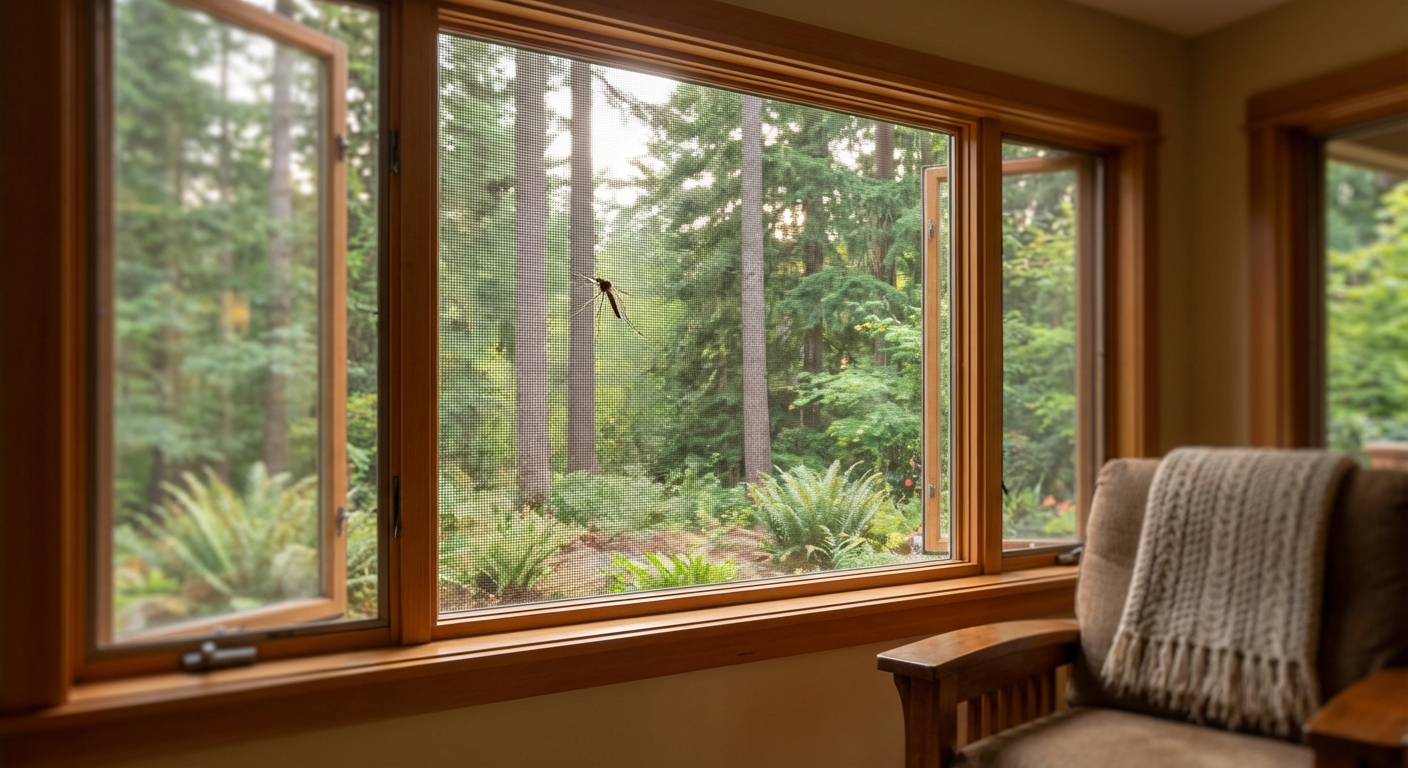
As the Pacific Northwest transitions into warmer months, Oregon homeowners face a familiar challenge: the influx of mosquitoes, wasps, flies, and other pests seeking entry into their homes. While many turn to chemical sprays or professional pest control services after an infestation occurs, the most effective strategy is prevention through physical exclusion—a cornerstone of Integrated Pest Management (IPM).
High-quality, professionally installed window and door screens serve as your home’s primary barrier against pest intrusion. According to the National Pest Management Association, Americans spend billions annually on pest control, with a significant portion directed at reactive measures after problems arise. But what if you could prevent these issues from the start?
This isn’t just about comfort—it’s about health and safety. The Oregon Health Authority actively monitors vector-borne diseases like West Nile Virus, which is transmitted by mosquitoes and has been reported in Oregon nearly every year. The Centers for Disease Control and Prevention explicitly recommends using screens on windows and doors as a first-line defense to “keep mosquitoes outside.”
In this guide, we’ll explore the specific pest threats facing Oregon homes, the science behind modern screen materials, how the right screens can reduce energy costs while protecting your family, and real-world applications for Oregon homeowners.
The Hidden Threats: Common Pests Invading Oregon Homes (And Why They’re More Than Just a Nuisance)
Oregon’s diverse climate—from the temperate Willamette Valley to the arid eastern regions—supports a variety of insect species that become increasingly active from April through October. Understanding these threats is the first step in effective home protection.
The Primary Culprits
Mosquitoes: Oregon hosts over 50 mosquito species, with some acting as disease vectors. They’re most active from dusk to dawn and are attracted to standing water common after spring rains. While most bites are merely irritating, certain mosquitoes can transmit serious illnesses.
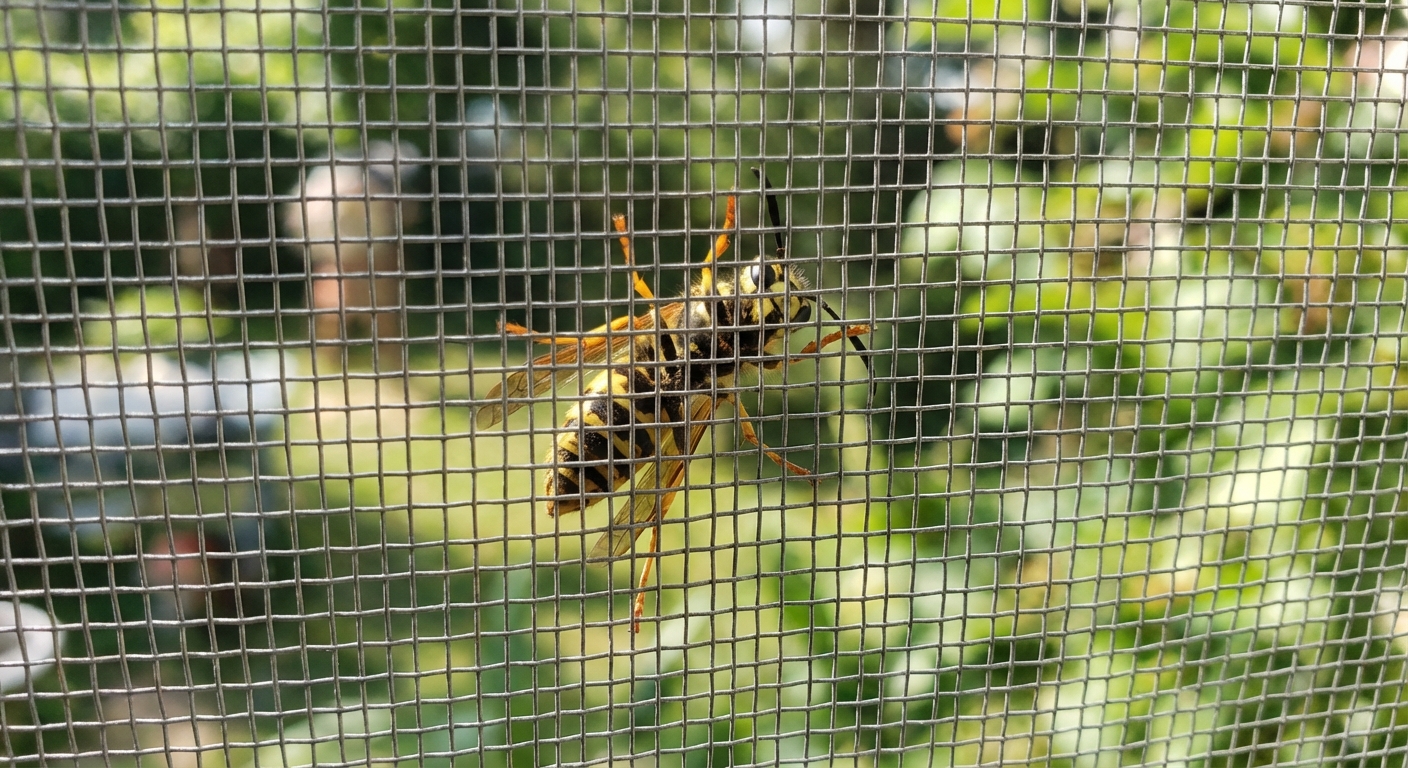
Wasps & Yellowjackets: Species like the Western Yellowjacket can be aggressive, especially in late summer. They often build nests in wall voids, attics, or eaves, and an open window provides easy access. Their stings can cause severe allergic reactions (anaphylaxis) in sensitive individuals, representing a significant medical risk.
Flies: House flies, cluster flies, and fruit flies are notorious for carrying pathogens including E. coli and Salmonella on their bodies. They move easily from outdoor waste to indoor food surfaces, making them a legitimate health concern beyond their nuisance factor.
Spiders: While most are beneficial, the Black Widow spider’s venomous bite is a legitimate concern for Oregon homeowners. Though the danger of the hobo spider’s bite is now considered less significant than previously thought, many homeowners prefer to keep all spiders outdoors.
Fall Invaders: As temperatures drop, several species seek indoor shelter:
- Carpenter Ants can cause significant structural damage by excavating wood for nesting. A gap in a window screen or frame can be an easy entry point for foraging ants.
- Boxelder Bugs and Stink Bugs congregate on warm building exteriors and enter through any available gap to overwinter indoors. While not harmful, they can be a major nuisance.
The West Nile Virus Threat
The most significant public health risk comes from mosquitoes. The Oregon Health Authority reports persistent West Nile Virus (WNV) cases, with recent years showing fluctuating but consistent infection rates. While 80% of infected individuals show no symptoms, the remainder can develop symptoms ranging from fever to serious, and sometimes fatal, neurological illness like encephalitis or meningitis.
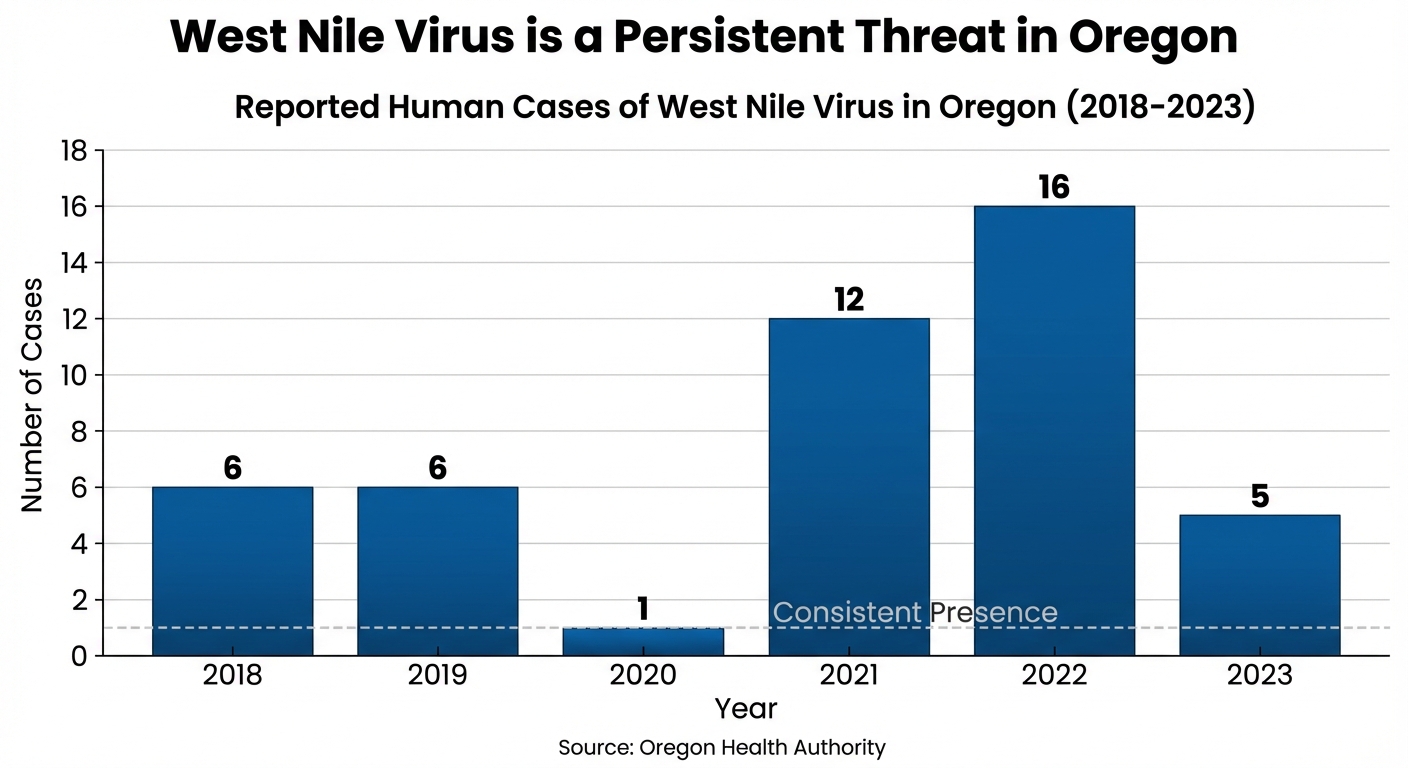
The data clearly shows that WNV is not an isolated incident but a recurring health concern for Oregonians. The CDC’s recommendation to use screens as primary prevention isn’t just guidance—it’s a critical public health measure. Any tear, hole, or gap in a screen can provide an entry point for these disease vectors, rendering your home vulnerable.
Not All Screens Are Created Equal: Understanding the Technology Behind Effective Pest Barriers
The effectiveness of a window screen depends on three critical factors: material composition, weave density, and physical integrity. Even the highest-quality mesh is useless if frames are warped or if gaps exist between the screen and window frame.
The Critical Role of Fit & Maintenance
The U.S. Environmental Protection Agency emphasizes that sealing cracks and holes is fundamental to preventing pest entry—a principle that applies directly to screen integrity. Common failure points include:
- Gaps between screen frames and window frames
- Warped frames from thermal expansion/contraction
- Degraded spline material from UV exposure
- Small tears or punctures in the mesh
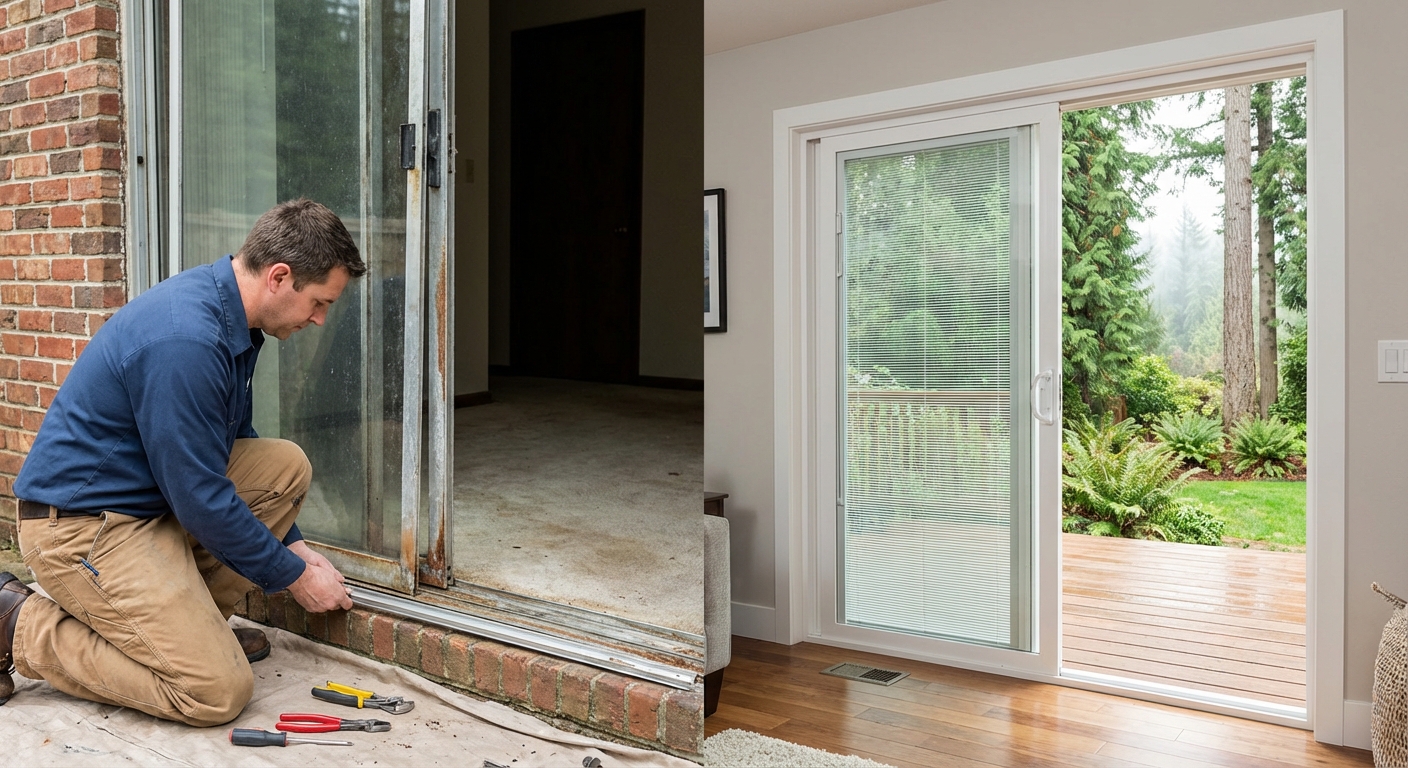
A screen is only effective if it forms a complete seal. Frames can warp from weather exposure, and the spline holding the mesh can deteriorate over time, causing the mesh to sag and pull away from the frame, creating entry points for pests.
Understanding Mesh Density
Standard screens typically use an 18×16 mesh (18 vertical strands per inch, 16 horizontal). While effective against flies and mosquitoes, this won’t stop smaller insects like gnats or “no-see-ums.” A tighter 20×20 mesh is required for these pests, though research shows this can reduce ventilation by over 30% compared to unscreened openings.
This trade-off between protection and airflow is important to understand. The right choice depends on your specific pest challenges and ventilation needs.
Material Science Breakdown
Modern screen technology offers specialized materials for specific needs:
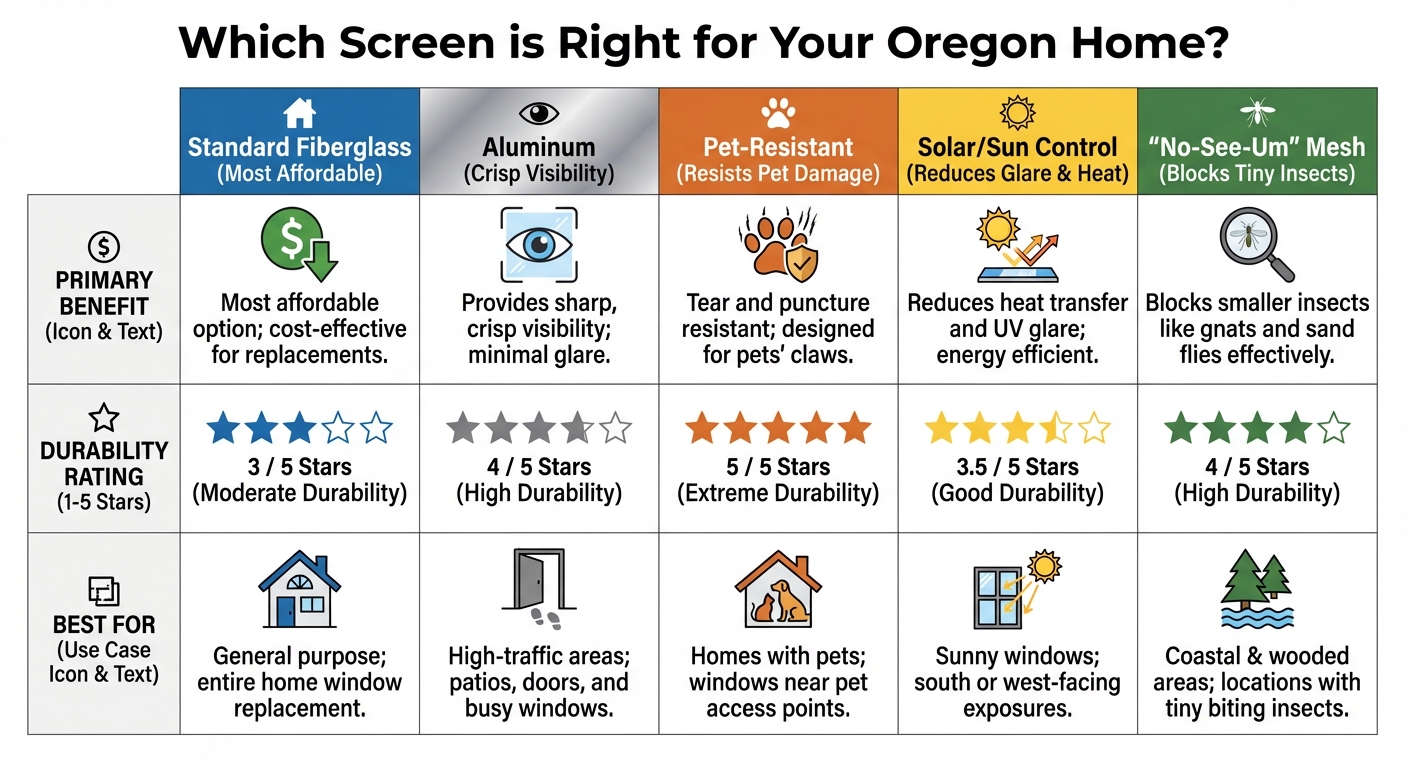
Standard Fiberglass remains the most popular choice for general-purpose applications. It’s cost-effective, flexible, and provides excellent visibility and airflow. However, it’s vulnerable to damage from pets and can wear out more quickly in high-traffic areas.
Aluminum screens offer high durability and rigid frames with crisp visibility. They’re ideal for high-traffic areas and provide better security against damage, though they can dent on impact.
Pet-Resistant screens solve a common problem for Oregon families. Made from vinyl-coated polyester, these screens are seven times stronger than standard fiberglass, effectively resisting tears and punctures from claws and paws.
Solar/Sun Control screens block 65-90% of solar heat while reducing glare and providing daytime privacy. Though they offer slightly reduced visibility and airflow compared to standard screens, they excel in energy efficiency.
“No-See-Um” Mesh features an extremely tight weave (20×20 or finer) specifically designed to exclude gnats, midges, and other tiny insects that pass through standard screens.
Specialized Solutions for Oregon Lifestyles
1. Pet-Resistant Screens
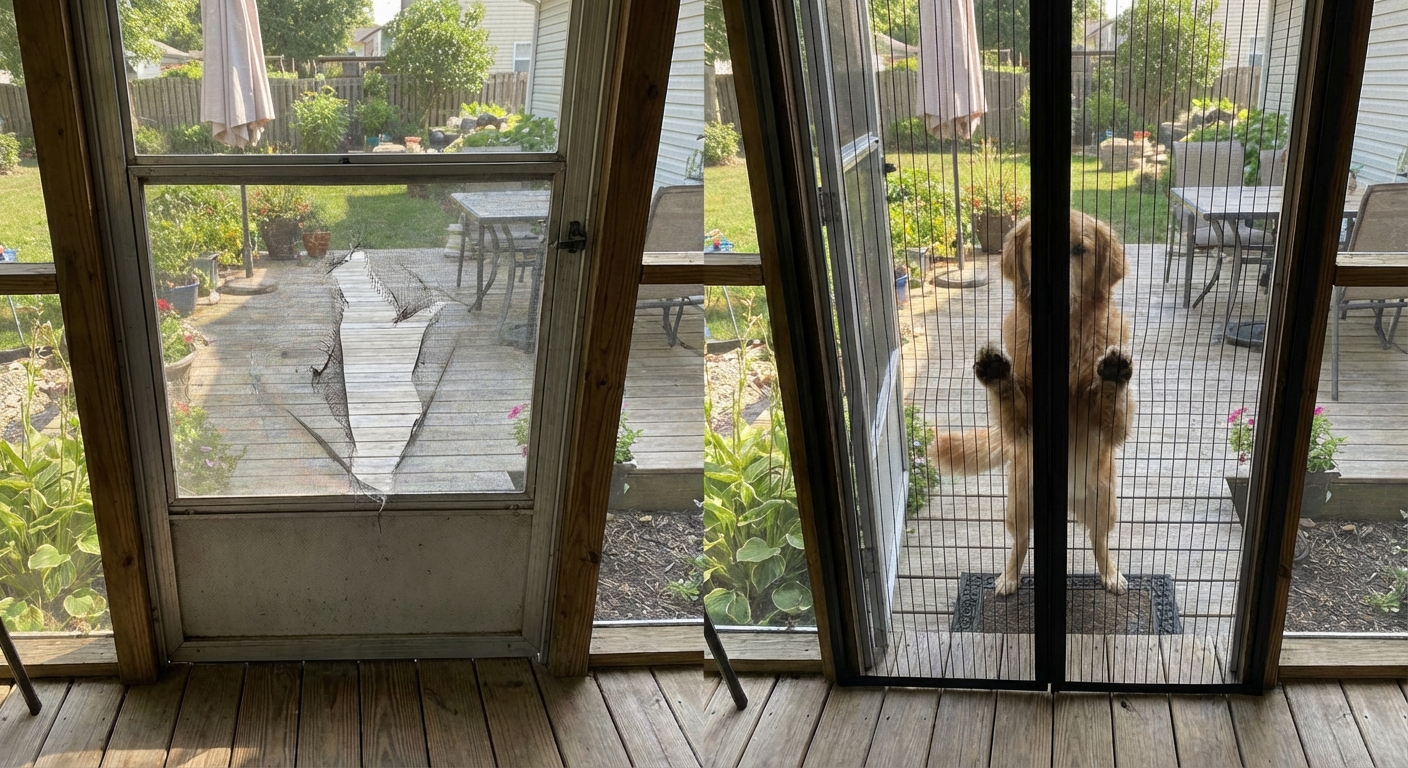
For Oregon families with pets, pet-resistant screens prevent the common cycle where a small, unnoticed tear from claws becomes an open door for pests. The vinyl-coated polyester construction maintains barrier integrity even under repeated contact with pets, ensuring your home’s pest protection remains intact year after year.
2. Solar Screens
Oregon’s sunny summers, especially in the Willamette Valley and Central Oregon, create significant solar heat gain. The U.S. Department of Energy reports that exterior solar screens can block 65-90% of solar heat, translating to cooling energy savings of 15% or more in Portland-area homes. As a bonus, the denser weave provides superior protection against very small insects, serving a dual purpose of energy efficiency and enhanced pest exclusion.
Solutions in Action: How the Right Screens Solve Common Oregon Home Challenges
Theory becomes practical when applied to real-world scenarios. These case studies demonstrate how strategic screen selection addresses the specific challenges facing Oregon homeowners.
Case Study 1: Integrated Solution for a Willamette Valley Home
The Challenge:
A Portland family faces three interconnected problems:
- Two dogs have repeatedly torn the patio door’s standard fiberglass screen, allowing flies and mosquitoes inside
- West-facing living room windows cause uncomfortable afternoon heat, forcing closed blinds and increased AC usage
- Growing concern about mosquito-borne disease with recent WNV reports in Oregon
The Solution:
- Patio Door: Install heavy-duty pet-resistant screen to create a durable barrier that withstands dog activity and restores the home’s physical pest barrier
- West-Facing Windows: Add exterior solar screens, which Lawrence Berkeley National Laboratory research shows are highly effective at reducing solar heat gain
Projected Outcomes:
- Enhanced pest protection: Near-impenetrable barrier significantly reduces insect entry and mosquito bite risk
- Increased durability: Eliminates the cycle of frequent screen repairs
- Improved energy efficiency: DOE estimates show potential cooling cost reductions exceeding 15%
Case Study 2: Nuisance Pest Prevention in Central Oregon
The Challenge:
A Bend homeowner backing onto wooded area experiences significant fall influx of boxelder bugs and spiders. Inspection reveals builder-grade screens with gaps at corners where spline has pulled away.
The Solution:
- Professional assessment to identify all screen failure points
- Replace faulty screens with professionally measured aluminum-frame screens (more rigid than vinyl, reducing warping)
- Upgrade wooded-area windows to tighter 20×20 “no-see-um” mesh
Projected Outcomes:
- Complete pest exclusion: Properly fitted, rigid frames eliminate entry gaps, restoring 100% barrier integrity
- Reduced nuisance: Annual fall pest influx eliminated, improving quality of life and reducing need for indoor pesticides
- Increased property value: High-quality, durable screens enhance home functionality and appeal
Smart Investment: Why Quality Screens Pay for Themselves
When homeowners view screens as an investment rather than an expense, the financial benefits become clear through reduced pest control costs, lower energy bills, and increased property value.
The True Cost of Reactive Pest Control
Americans spend billions annually on pest control services, with the industry generating over $20 billion in 2021 alone. Much of this spending addresses problems after they occur. A single wasp nest removal can cost $100-$500, while ongoing mosquito treatment services run $300-$500+ per season.
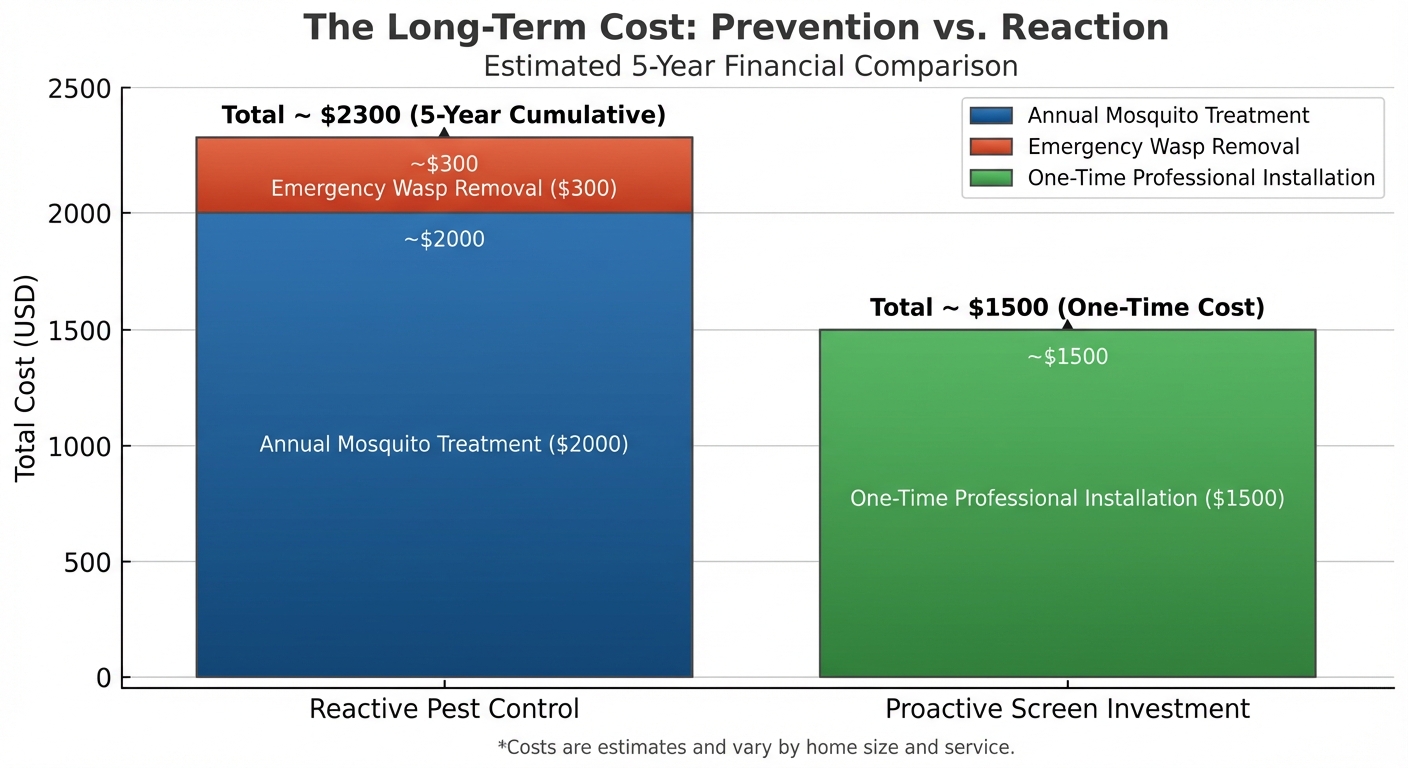
The comparison is striking: quality screens represent a one-time investment that provides protection for 10-20+ years, while reactive pest control creates ongoing annual expenses that accumulate over time.
Energy Savings Analysis
For Oregon homeowners with west- or south-facing windows:
- Solar screens blocking 65-90% of solar heat can reduce cooling costs by 15%+
- In a home with $1,200 annual cooling costs, this represents $180+ in annual savings
- Pacific Northwest National Laboratory research confirms these savings are achievable in Oregon’s climate
Over a 15-year period, these energy savings can offset the initial investment in quality solar screens while providing continuous pest protection and improved comfort.
Prevention vs. Treatment
The EPA’s IPM approach emphasizes that physical exclusion is the most cost-effective, long-term pest management strategy. Compared to:
- Chemical pesticides: Recurring costs, health concerns, environmental impact
- Professional pest control: Ongoing service fees, reactive rather than proactive
- Quality screens: One-time investment with 10-20+ year lifespan
Property Value Enhancement
High-quality, well-maintained screens are an attractive feature during home sales, demonstrating:
- Proactive home maintenance
- Energy-conscious upgrades
- Attention to health and safety details
The Pet-Owner Factor
For the estimated 67% of U.S. households that own pets, pet-resistant screens eliminate the recurring cost of screen repairs and the pest intrusion that follows each damage incident. This makes them particularly valuable for active Oregon families.
Maximizing Screen Performance: The Critical Role of Professional Installation & Regular Maintenance
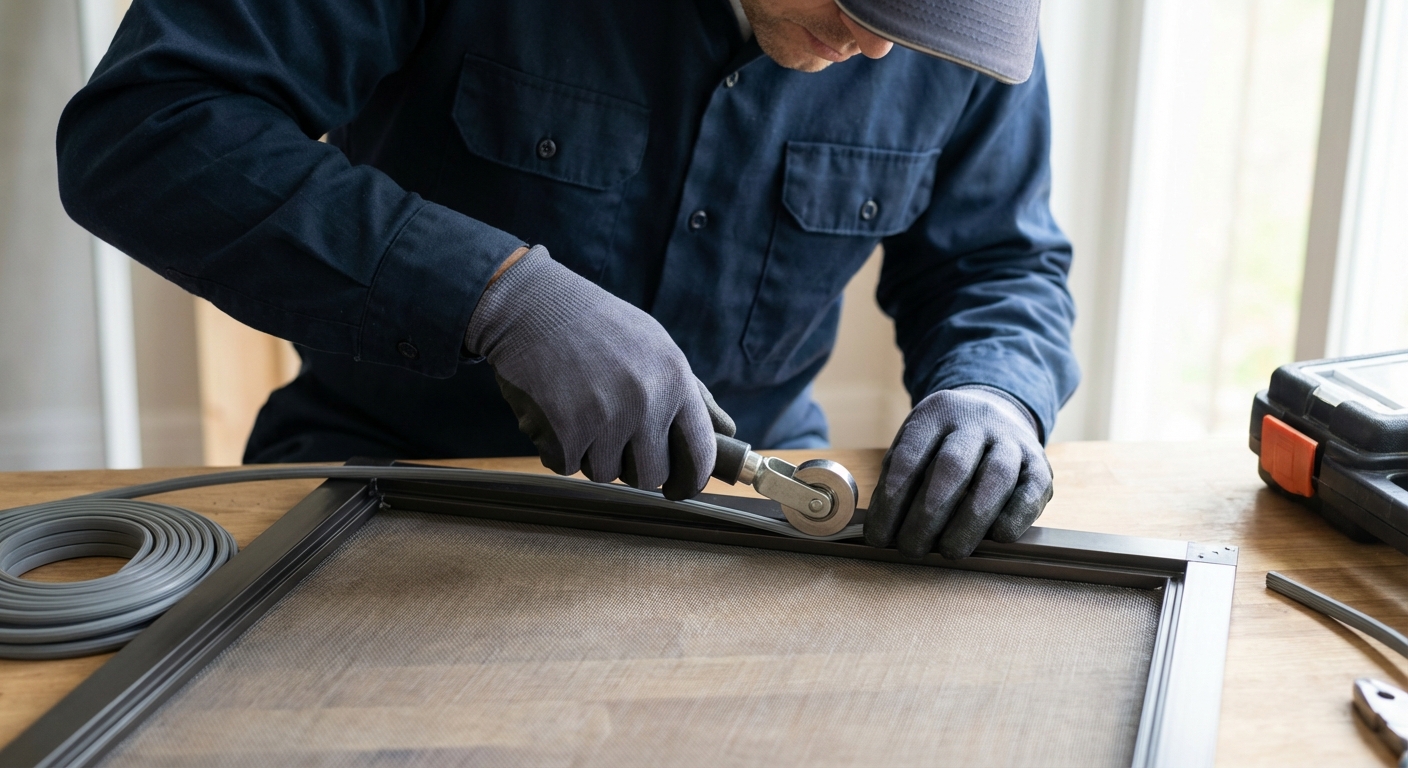
Even the highest-quality screen material will fail to protect your home if not properly installed and maintained. Understanding what separates professional-grade installation from DIY approaches ensures your investment delivers decades of reliable service.
Why Professional Installation Matters
- Precise Measurement: Custom-fitted screens eliminate gaps that even 1/16″ can provide pest entry
- Proper Frame Selection: Professionals match frame material and rigidity to window type and exposure
- Spline Installation: Correct tensioning prevents mesh sagging and frame separation over time
- Quality Materials: Professional suppliers use UV-resistant splines and frames designed for Pacific Northwest weather
Professional installers understand the nuances of Oregon’s climate—from coastal humidity to high desert conditions—and select materials accordingly. They also ensure proper integration with your window frames, creating a complete seal that DIY installations often miss.
The Hidden Costs of DIY
While big-box stores offer pre-sized screens and DIY kits, common issues include:
- Generic sizing that leaves gaps at corners or edges
- Lower-grade materials that degrade faster under Oregon’s weather conditions
- Improper tension leading to sagging mesh and pest entry points
- Lack of warranty or service guarantee
What seems like a cost-saving measure often results in recurring expenses as screens fail prematurely or fail to provide adequate protection.
Essential Maintenance Schedule
Annual Inspection (Spring):
- Check for tears, holes, or punctures in mesh
- Inspect frame corners for separation or warping
- Test spline integrity and re-seat if loose
- Clean accumulated debris from frames and tracks
Seasonal Cleaning:
- Gentle washing with mild soap and soft brush
- Rinse thoroughly to prevent residue buildup
- Check door screen rollers and closure mechanisms
Regular maintenance extends screen life significantly and ensures your pest barrier remains effective year after year.
When to Replace vs. Repair
- Small tears in quality mesh: Repairable with patch kits
- Frame warping or multiple tears: Full replacement recommended
- Spline degradation: Re-screening more cost-effective than full replacement
- Upgrading to specialized mesh (pet-resistant, solar): Replacement opportunity
Professional Service Value
Companies like Town & Country Glass offer:
- Expert assessment of current screen condition
- Material recommendations based on specific needs (pets, sun exposure, insect types)
- Professional installation with warranty
- Ongoing maintenance services
This comprehensive approach ensures your screens function optimally throughout their lifespan, providing continuous protection and value.
Key Takeaways
Window and door screens represent far more than a simple home amenity—they’re an essential technology for health, safety, and comfort in Oregon. As this analysis demonstrates, properly selected and maintained screens serve as the frontline defense in an Integrated Pest Management strategy, physically blocking disease-carrying vectors like mosquitoes and other nuisance insects.
The persistent presence of West Nile Virus in Oregon elevates screens from a comfort feature to a critical public health protection measure. Beyond pest exclusion, advances in screen technology now offer dual benefits: pet-resistant screens provide durability for active families, while solar screens deliver significant energy savings alongside superior insect protection.
The effectiveness of any screen system, however, hinges on three factors: appropriate material selection for your specific needs, professional installation ensuring complete barrier integrity, and regular maintenance. For Oregon homeowners, investing in quality screens is a proactive, cost-effective decision that protects property value, family health, and overall quality of life.
Ready to Protect Your Home?
Is your home fully protected? Town & Country Glass offers professional screen assessment, installation, and maintenance services throughout Oregon. Our expert team can help you select the right screening solution for your specific needs—whether you’re dealing with persistent pests, want to improve energy efficiency, or need pet-resistant durability.
References:
- National Pest Management Association. (2022). NPMA Announces Annual Industry Findings. https://npmapestworld.org/newsroom/npma-announces-annual-industry-findings-pest-control-industry-generated-20-billion-in-2021/
- U.S. Environmental Protection Agency. (2023). Integrated Pest Management (IPM) Principles. https://www.epa.gov/safepestcontrol/integrated-pest-management-ipm-principles
- American Mosquito Control Association. (n.d.). Mosquito Season. https://www.mosquito.org/page/faq
- Oregon State University Extension Service. (2019). Controlling Mosquitoes in Your Yard and Garden. https://extension.oregonstate.edu/gardening/pests-diseases/controlling-mosquitoes-your-yard-garden
- Oregon State University Extension Service. (2021). Paper Wasps, Yellowjackets and Other Stinging Wasps. https://extension.oregonstate.edu/pests-weeds-diseases/insects/paper-wasps-yellowjackets-other-stinging-wasps
- World Health Organization. (2020). Houseflies. https://www.who.int/water_sanitation_health/resources/vector398to415.pdf
- Washington State University Extension. (n.d.). Hobo Spider. https://pestsense.cahnrs.wsu.edu/search-pests/all-pests/hobo-spider/
- Oregon State University Extension Service. (2017). Carpenter ants: pesky and picky. https://extension.oregonstate.edu/news/carpenter-ants-pesky-picky
- University of Maryland Extension. (n.d.). Boxelder Bugs. https://extension.umd.edu/resource/boxelder-bugs-home-and-garden
- Oregon Health Authority. (n.d.). About West Nile Virus. https://www.oregon.gov/oha/ph/diseasesconditions/diseasesaz/westnilevirus/pages/aboutwnv.aspx
- Oregon Health Authority. (2024). Vector-borne Disease Surveillance Reports. https://www.oregon.gov/oha/ph/diseasesconditions/communicabledisease/reportingcommunicabledisease/pages/surveillancereports.aspx
- Centers for Disease Control and Prevention. (2023). Prevent Mosquito Bites. https://www.cdc.gov/mosquitoes/mosquito-bites/prevent-mosquito-bites.html
- University of Florida IFAS Extension. (2018). Insect Screening for Pest Exclusion in Greenhouses. https://edis.ifas.ufl.edu/publication/IN299
- Phifer Incorporated. (n.d.). Product Information & Technical Data. https://www.phifer.com/resources/document-library/
- U.S. Department of Energy. (n.d.). Energy Saver: Window Coverings and Attachments. https://www.energy.gov/energysaver/window-coverings-and-attachments
- Pacific Northwest National Laboratory. (2019). Windows for High-Performance Commercial Buildings. https://www.pnnl.gov/main/publications/external/technical_reports/PNNL-28543.pdf
- Lawrence Berkeley National Laboratory. (n.d.). Windows & Daylighting – Shading. https://windows.lbl.gov/daylighting/shading