Table of Contents
- Why Portland Businesses Are Prime Targets: Crime, Nature, and Cost
- Tempered vs. Laminated vs. Standard: The Critical Differences Every Business Owner Must Know
- Don’t Choose Between Security and Energy Efficiency: Modern Solutions Deliver Both
- Real-World Results: How Security Glazing Stops Break-Ins and Protects Lives
- Beyond Price: How to Evaluate Security Glazing as a Strategic Business Investment
- Final Thoughts
When most Portland business owners think about security, they picture alarm systems, surveillance cameras, and reinforced doors. But there’s a critical vulnerability that’s often overlooked: your storefront glass. In 2023 alone, Portland businesses faced 4,281 reported burglaries, with thousands more incidents of vandalism targeting storefronts. That’s roughly 12 businesses burglarized every single day. Here’s the uncomfortable truth: standard glass is your building’s weakest point. It’s an open invitation to criminals who know they can smash through in seconds. Add to that the environmental hazards unique to the Pacific Northwest—including our location in the Cascadia Subduction Zone and frequent windstorms—and you’ve got a recipe for significant risk. A single break-in doesn’t just cost you the value of stolen goods. Emergency glass repairs, lost revenue during closure, skyrocketing insurance premiums, and damage to your reputation can quickly add up to tens of thousands of dollars. The question isn’t whether you can afford to upgrade your commercial glass security—it’s whether you can afford not to. In this comprehensive guide, you’ll learn exactly what threats Portland businesses face, understand the critical differences between glass types that many contractors won’t explain clearly, see real-world evidence of what works, and discover how security glazing pays for itself through prevented losses and reduced operating costs. Let’s transform your storefront from a liability into a strategic asset.
Why Portland Businesses Are Prime Targets: Crime, Nature, and Cost
The Property Crime Reality
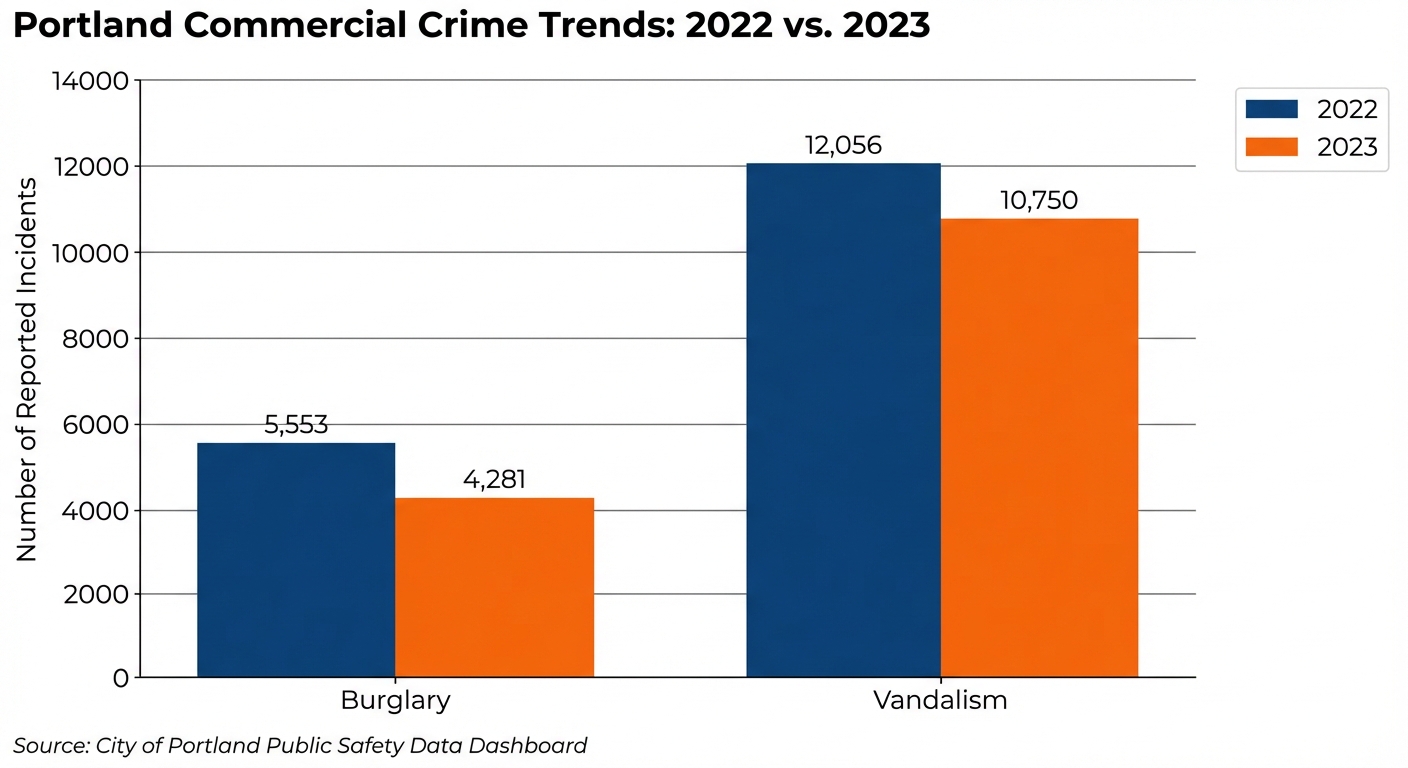
Let’s start with the numbers. Portland’s 4,281 burglaries in 2023 represent a 22.9% decrease from the previous year—which sounds encouraging until you realize that still means a dozen businesses are hit every day. Vandalism remains rampant too, with 10,750 reported incidents last year.
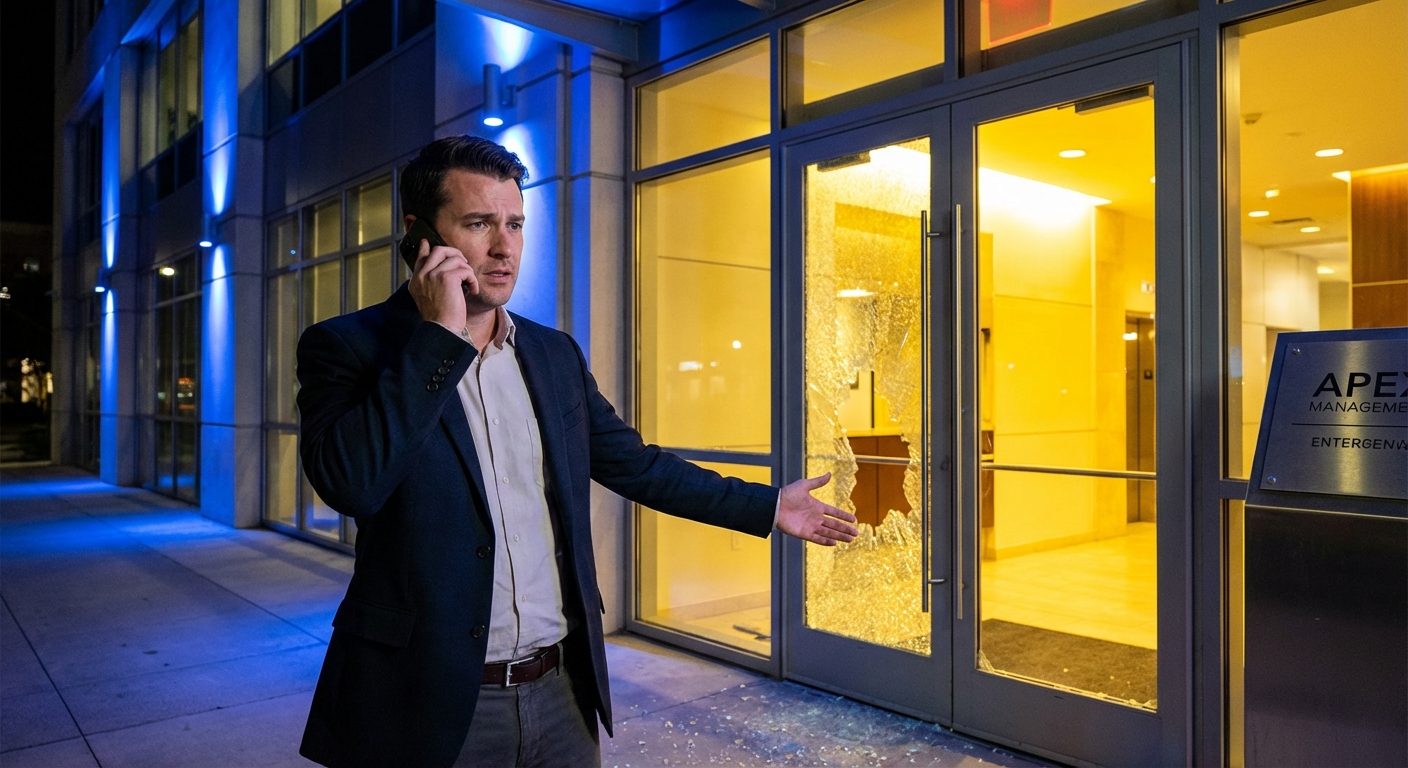
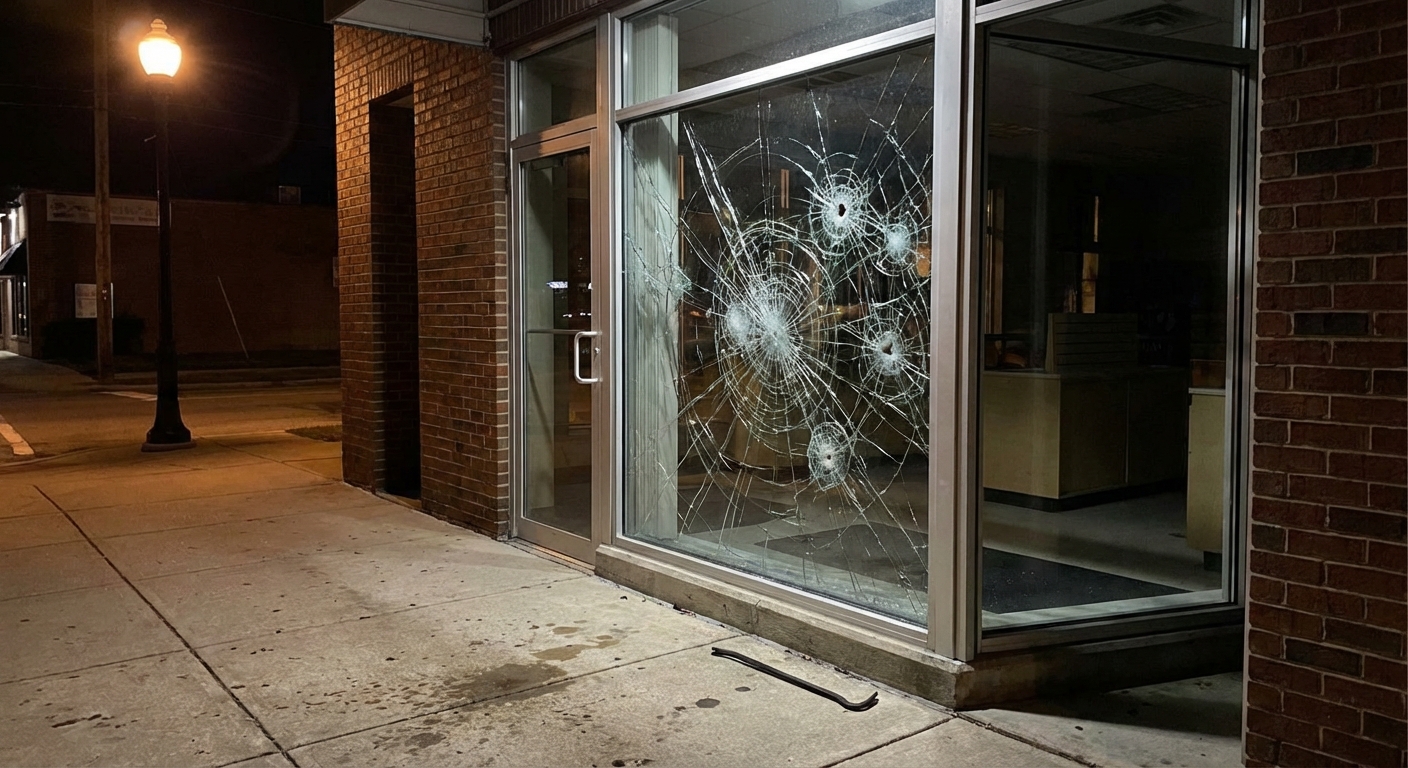
The criminal methodology hasn’t changed much: the “smash-and-grab.” Thieves know standard glass breaks easily, allowing them to be in and out in under 60 seconds—often before any alarm response arrives. This isn’t just a Portland problem; the National Retail Federation found that retail crime cost U.S. businesses $112.1 billion in 2022, with Portland shouldering its share of these losses.
Environmental Hazards Unique to Portland
Beyond human threats, Portland faces environmental risks that make weak glazing even more dangerous: Seismic Risk: We’re sitting directly in the Cascadia Subduction Zone. According to Oregon Emergency Management, a magnitude 9.0+ earthquake isn’t a question of “if” but “when.” During a major seismic event, standard glass becomes deadly projectiles, shattering and falling from frames. Oregon building codes now specifically mandate drift-accommodating glazing systems to address this life-safety issue. Severe Windstorms: The National Weather Service regularly issues high wind warnings for our metro area, with gusts exceeding 60 mph that turn loose debris into glass-shattering missiles. One storm can take out multiple storefronts in a single commercial district.
The Hidden Costs of a Security Breach
When calculating the true cost of a break-in, most business owners dramatically underestimate the financial impact:
- Direct losses: Stolen inventory and cash (often $8,000-$12,000 per incident)
- Emergency repairs: Board-up services and glass replacement typically run $5,000-$15,000+ for a single storefront
- Business interruption: The average small business loses $3,000-$5,000 per day of unexpected closure—and that’s just lost revenue, not counting the productivity impact
- Insurance premium increases: A single claim can raise your annual premiums by 20-40%
- Intangible costs: Customer perception takes a hit when they see boarded-up windows, employees feel unsafe, and you bear the psychological toll of violation
When you add up these costs, the investment in proper security glazing starts looking less like an expense and more like essential insurance.
Tempered vs. Laminated vs. Standard: The Critical Differences Every Business Owner Must Know
Here’s where most business owners get dangerously misled. Not all “strong” or “safety” glass provides security. Understanding these distinctions could mean the difference between a prevented break-in and a costly disaster.
Annealed (Standard) Glass
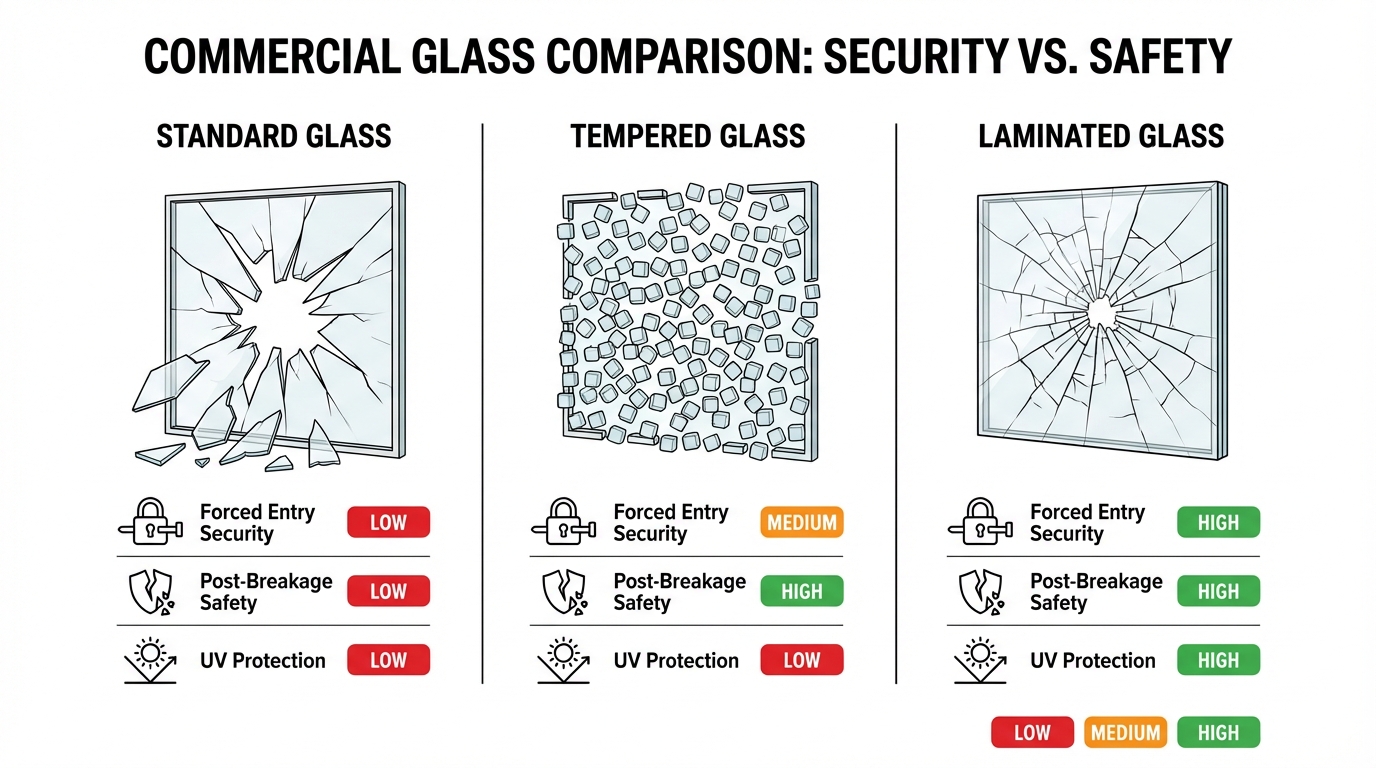
This is the baseline product—the glass found in many older Portland commercial buildings. It offers zero security. When broken, it creates large, dangerous shards that form an immediate entry point. If your building still has standard glass in ground-level applications, it should be considered a liability requiring immediate attention.
Tempered Glass—The Safety Misconception
Tempered glass is manufactured through a process of extreme heating (600°C+) followed by rapid cooling, creating surface compression that makes it four to five times stronger than standard glass. Sounds secure, right?
When tempered glass finally does break—and it will under sufficient force—it shatters completely into thousands of small cubes. The entire pane disintegrates instantly. This “dicing” pattern is specifically designed to prevent cutting injuries (meeting ANSI Z97.1 safety standards), but it creates a wide-open entry point for intruders. Building codes require tempered glass for doors, side-lites, and low windows precisely because of this safety feature. But if you’re counting on it for security, you’re making a costly mistake. An intruder who gets through tempered glass gets through completely—there’s no barrier left.
Laminated Glass—True Security
This is where real security begins. Laminated glass consists of two or more glass layers bonded by a tough polymer interlayer, typically polyvinyl butyral (PVB). The game-changer: When laminated glass is struck, the glass may crack—sometimes extensively—but the fragments adhere to the interlayer. The pane stays in the frame. An intruder must strike the same spot repeatedly to create even a small opening, which requires:
- Significant time (1-2+ minutes of sustained attack vs. 5-10 seconds for standard glass)
- Physical exertion that’s conspicuous and exhausting
- Tremendous noise that draws attention
Security experts call this “delay and deter.” Studies consistently show that criminals abandon attempts when faced with laminated glass because the risk-reward calculation shifts dramatically against them.
Advanced Laminated Options
For higher-risk applications, there’s SentryGlas Plus (SGP)—an ionoplast polymer interlayer that’s 100 times stiffer and five times stronger than standard PVB. Banks, government buildings, and high-value retail operations use SGP-laminated glass because it provides exceptional resistance even to sustained, determined attacks.
Additional Benefits of Laminated Glass
Beyond security, laminated glass delivers:
- UV Protection: Blocks 99%+ of harmful UV radiation, protecting merchandise and interior furnishings from fading
- Sound Reduction: Significantly reduces noise transmission, creating a quieter interior environment—a real advantage in busy Portland commercial districts
- Blast Mitigation: Provides protection capabilities used extensively in government and high-risk facilities
Don’t Choose Between Security and Energy Efficiency: Modern Solutions Deliver Both
One of the most common misconceptions about security glazing is that it forces you to sacrifice energy efficiency. The reality? Modern insulated glass technology delivers both.
The Energy Code Reality
Oregon’s 2021 Energy Efficiency Specialty Code mandates specific thermal performance standards for commercial glazing. Single-pane glass, regardless of security features, typically cannot meet these requirements. This is where Insulated Glass Units (IGUs) become essential—and they’re actually the perfect platform for security glazing.
IGU Construction for Security + Efficiency
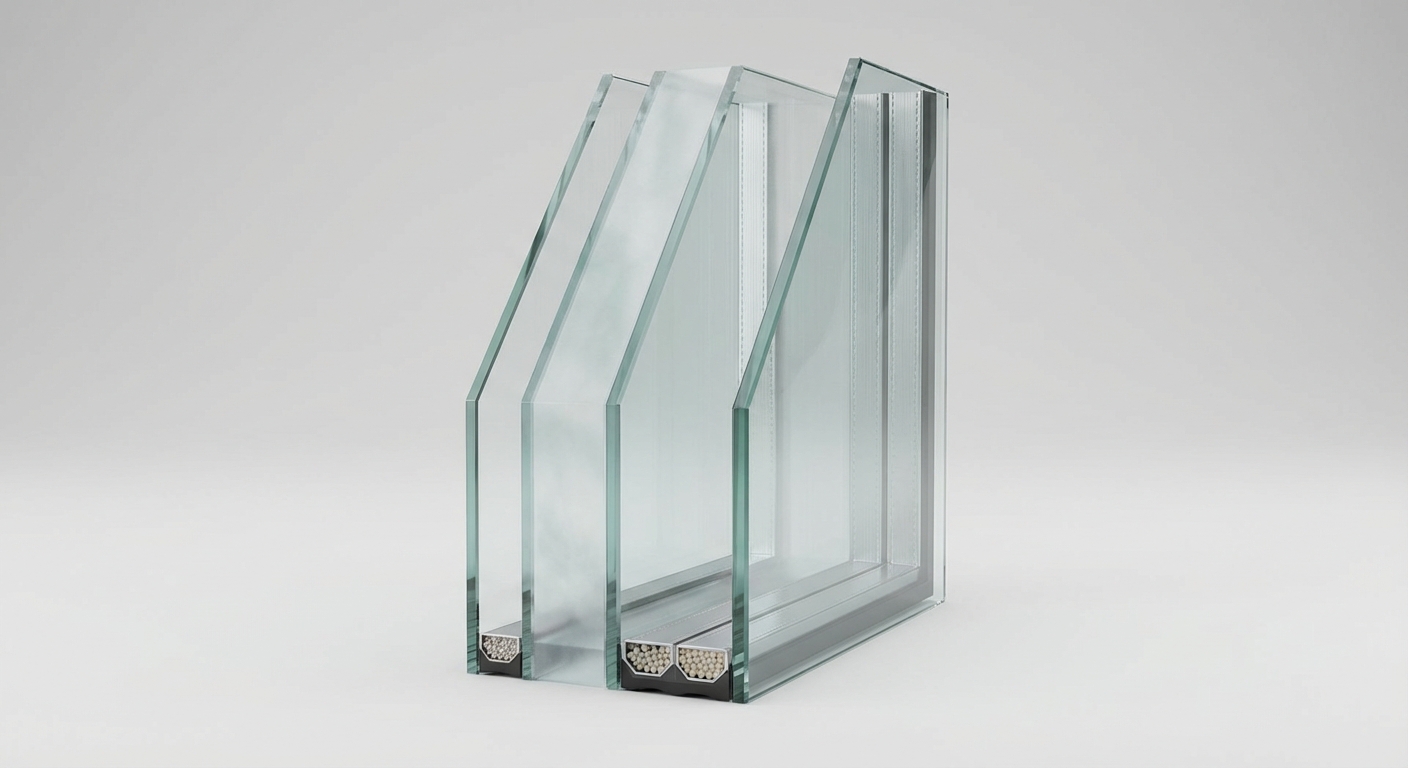
An IGU combines two or more panes separated by a sealed space filled with argon gas. The optimal security configuration uses:
- Exterior pane: Laminated security glass (your first line of defense against break-ins and impacts)
- Interior pane: Tempered or heat-strengthened glass (for safety if interior breakage occurs)
- Space between: Argon gas fill for superior insulation
This assembly provides:
- Forced-entry resistance from the laminated exterior
- Excellent thermal performance (low U-values) meeting or exceeding Oregon energy codes
- Enhanced condensation resistance
- Superior sound insulation from the combination of laminated glass plus the insulated airspace
Real-World Application
Consider a modern Portland storefront using a laminated/argon/tempered IGU. You achieve:
- Security rating: Certified forced-entry resistance
- U-value: 0.25 or better (exceeding code minimum requirements)
- STC rating: 35-40 (significant noise reduction in busy commercial districts)
- SHGC: Optimized Solar Heat Gain Coefficient for reducing cooling costs
Investment Perspective
While IGUs with security glazing cost more upfront than basic single-pane tempered glass, they deliver measurable returns:
- Energy savings: 10-30% reduction in HVAC costs (ongoing annual savings)
- Insurance discounts: Many insurers offer 5-15% premium reductions for certified security glazing
- Avoided losses: Protection against the $8,000-$15,000+ cost of a break-in
- Code compliance: Essential for permits and maintaining property value
The point is this: you don’t have to choose between security and efficiency. Properly designed modern glazing systems deliver both, along with sound reduction and UV protection as bonus benefits.
Real-World Results: How Security Glazing Stops Break-Ins and Protects Lives
Data and specifications matter, but nothing proves effectiveness like documented real-world performance. Let’s examine the research.
Case Study 1: The Loss Prevention Research Council Field Study
The Loss Prevention Research Council (LPRC)—a leading academic organization studying retail crime—partnered with a major retailer to test laminated security glass in actual high-crime locations. The Setup: They upgraded storefronts from tempered to laminated glass in stores with documented histories of break-ins. The Results: Surveillance footage captured multiple attempted break-ins where criminals struck the glass repeatedly with hammers and pry bars. In every documented case:
- The glass cracked but did not fail—no entry was achieved
- Criminals abandoned attempts after 1-2 minutes of sustained attack (compared to 5-10 seconds for standard glass)
- Three specific deterrent factors were identified: visible failure to breach, extended time required, and excessive noise generated
Case Study 2: Seismic Performance Research
FEMA’s E-74 report, “Reducing the Risks of Nonstructural Earthquake Damage,” documents extensive shake-table testing of various glazing types under simulated seismic conditions. Standard/Tempered Glass Performance: Shattered and fell from frames during simulated seismic events, creating:
- Dangerous falling debris hazards
- Compromised building envelopes exposing interiors to weather
- Blocked egress routes preventing safe evacuation
Laminated Glass Performance: Even when cracked due to frame deformation, laminated glass:
- Remained largely contained within frames
- Maintained building envelope integrity
- Allowed safe egress routes
- Protected occupants from falling glass injuries
Cascadia Relevance: With Portland in an active seismic zone, laminated glass isn’t just about security—it’s about life safety during the earthquake that Oregon Emergency Management says will inevitably come.
Testing Standards and Certifications to Know
When evaluating security glazing products, ask contractors about third-party certifications:
- ASTM F1233: Standard test method for security glazing materials (forced entry resistance)
- CPSC 16 CFR 1201 & ANSI Z97.1: Safety glazing standards (impact and breakage safety)
- UL 972: Burglar-resisting glazing material testing
These aren’t just alphabet soup—they represent independent verification that products perform as claimed. When working with Town & Country Glass, we ensure all security glazing meets or exceeds applicable standards for your specific application.
Beyond Price: How to Evaluate Security Glazing as a Strategic Business Investment
Let’s talk about the financial reality of security glazing. Yes, it costs more upfront than basic tempered glass. But viewing it purely as an expense misses the complete picture.
Understanding the Cost Spectrum
Budget Option: Retrofit Security Film ($7-15/sq ft installed) These heavy-duty polyester films applied to existing glass can improve shatter resistance. They’re cost-effective for upgrades, but performance depends heavily on proper anchoring systems. Without correct attachment to the frame, the entire filmed pane can be pushed out upon impact. Best for temporary solutions or low-to-moderate risk locations. Mid-Range Solution: Laminated Glass with PVB ($25-50/sq ft installed) This provides proven security performance, UV protection, and sound reduction. It’s the sweet spot for most commercial storefronts, offices, and ground-floor windows. The cost differential versus basic tempered glass pays for itself relatively quickly through avoided losses and insurance savings. High-Security Option: Advanced Laminated or Polycarbonate ($50-150+/sq ft installed) SGP-laminated glass or polycarbonate glazing offers exceptional impact resistance and is used in jewelry stores, banks, and government facilities. The significant upfront investment is justified for high-risk or high-value applications.
Calculating True ROI
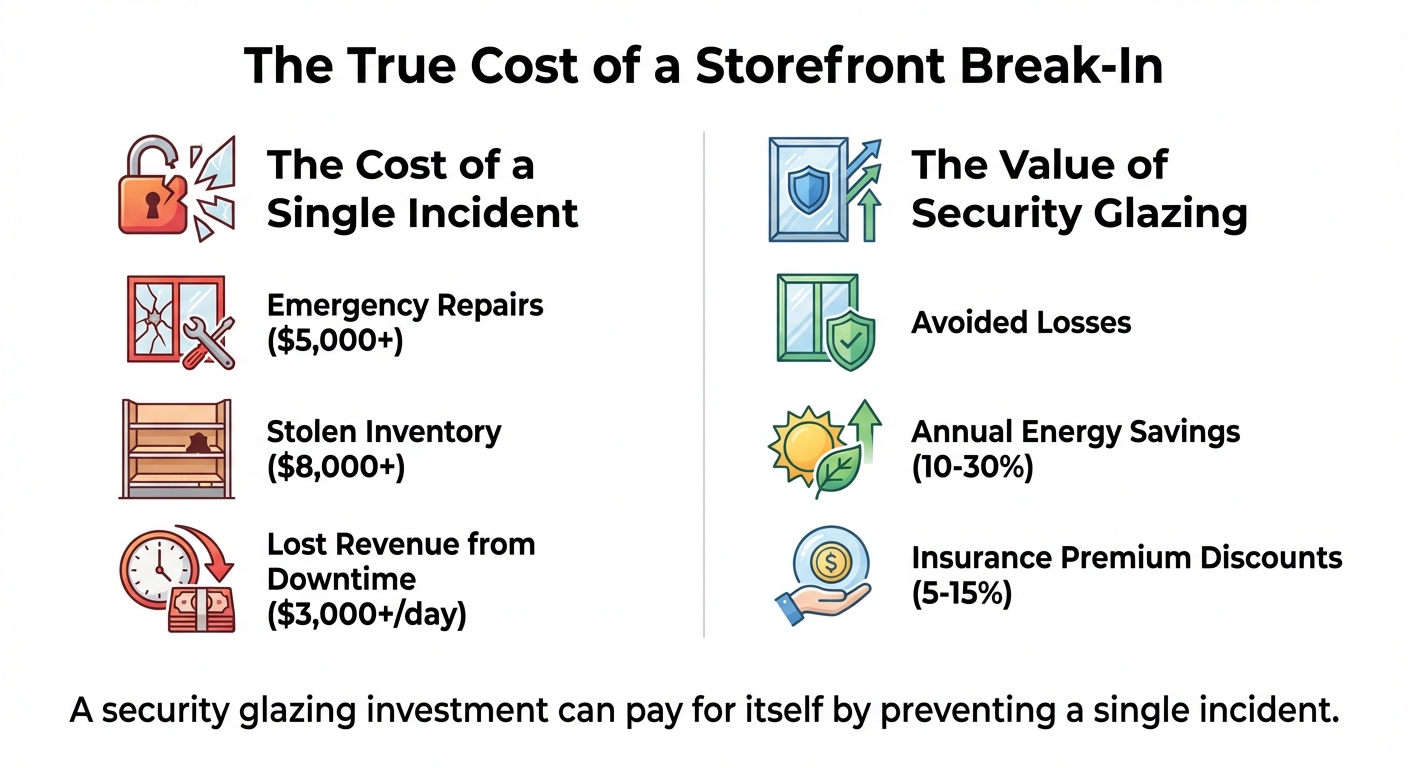
Here’s where security glazing starts looking less like an expense and more like a sound investment:
Avoided Costs:
- Average commercial burglary loss: $8,000-$12,000 (not including business interruption)
- Emergency glass replacement after break-in: $5,000-$15,000+ for a storefront
- Business interruption: $3,000-$5,000 per day of unexpected closure
- Insurance premium increase: 20-40% annually after a claim
Positive Returns:
- Energy savings from IGUs: 10-30% reduction in HVAC costs (ongoing annual savings)
- Insurance discounts: Many carriers offer 5-15% premium reductions for certified security glazing
- Property value: Modern, code-compliant glazing increases building value and marketability
The Value of Expert Installation
Security glazing is only as effective as its installation. Critical factors include:
- Proper frame selection and anchoring (especially for seismic performance)
- Correct glazing compound and edge support
- Integration with existing security systems
- Compliance with Oregon building codes and permit requirements
This is why choosing an experienced local contractor matters. Town & Country Glass brings:
- Portland-specific code knowledge and permit expertise
- Experience with both new construction and retrofit applications
- Access to the full range of security glazing products
- Proper assessment of risk level and appropriate solution recommendations
- Professional installation with comprehensive warranty coverage
- Ongoing service and maintenance support
Questions to Ask Any Glazing Contractor
Before making a decision, ensure your contractor can answer:
- What security testing standards do your products meet?
- Can you provide case studies or references from similar local businesses?
- How do you account for seismic requirements in your installations?
- What warranties cover both product and installation?
- Do you coordinate with insurance carriers for certification documentation?
Final Thoughts
Your storefront glass is either your biggest vulnerability or your first line of defense. In Portland, where property crime remains a daily threat and natural hazards from earthquakes to windstorms pose documented risks, that choice carries significant consequences. The evidence is clear: standard glass offers no meaningful protection, tempered glass serves safety functions but fails as a security solution, and laminated security glass provides proven protection that also delivers energy efficiency, UV protection, and sound reduction. When properly integrated into insulated glass units, security glazing meets both the security challenges and energy code requirements that Portland businesses face. The investment argument is equally compelling. When you calculate avoided costs from prevented break-ins, insurance premium savings, and ongoing energy efficiency gains, security glazing isn’t an expense—it’s a risk management investment that delivers measurable returns. Perhaps most importantly, in the Cascadia Subduction Zone, laminated glass serves a critical life-safety function that standard or tempered glass simply cannot. This isn’t just about protecting inventory; it’s about protecting people.
Ready to Protect Your Business?
Don’t wait for a break-in or a natural disaster to take action. Contact Town & Country Glass today for a free security assessment of your commercial property. Our Portland-based team will evaluate your specific risk factors, explain your options without pressure, and provide a detailed proposal that fits your security needs and budget.
References:
- Acoustical Surfaces, Inc. (n.d.). Sound Transmission Class (STC) Ratings for Glass. Retrieved from https://www.acousticalsurfaces.com/acoustic_IOI/IOI_Rules.htm#glass
- American Society of Civil Engineers (ASCE). (2017). Study on the Seismic Performance of Architectural Glass. ASCE Library. Retrieved from https://ascelibrary.org/doi/10.1061/%28ASCE%29SC.1943-5576.0000329
- City of Portland. (2024). Public Safety Data Dashboard. Retrieved from https://www.portland.gov/safety/data
- Eastman Chemical Company. (2019). Laminated Glass: The Leader in Safety Glazing. Retrieved from https://www.saflex.com/sites/default/files/2019-12/saflex-laminated-glass-the-leader-in-safety-glazing-en.pdf
- Federal Emergency Management Agency (FEMA). (2021). Seismic Design of Glazed Systems. FEMA E-74, Chapter 9. Retrieved from https://www.fema.gov/sites/default/files/documents/fema_e-74_reducing-risks-nonstructural-earthquake-damage.pdf
- Insurance Information Institute. (2024). What is business interruption insurance?. Retrieved from https://www.iii.org/article/what-business-interruption-insurance
- International Window Film Association. (n.d.). Safety & Security Film. Retrieved from https://iwfa.com/consumer-information/safety-security-film
- Kuraray. (n.d.). SentryGlas® Ionoplast Interlayer Technical Data. Retrieved from https://www.kuraray.com/products/sentryglas
- Loss Prevention Research Council. (2020). Glazing Security Solutions Impact Report. LPRC Report. Retrieved from https://lpresearch.org/resource/glazing-security-solutions-impact-report/
- National Glass Association. (n.d.). Protective Glazing. Glass Technical Paper. Retrieved from https://www.glass.org/sites/default/files/2021-09/gtp_protective_glazing_20210922.pdf
- National Retail Federation. (2023). 2023 National Retail Security Survey. Retrieved from https://nrf.com/research/national-retail-security-survey-2023
- National Weather Service – Portland, OR. (n.d.). Hazards. Retrieved from https://www.weather.gov/pqr/hazards
- Nationwide. (n.d.). How to get discounts on your business insurance. Retrieved from https://www.nationwide.com/lc/resources/small-business/articles/discounts-on-business-insurance
- Oregon Building Codes Division. (2022). 2022 Oregon Structural Specialty Code (OSSC). Retrieved from https://www.oregon.gov/bcd/codes-stand/pages/structural-codes.aspx
- Oregon Office of Emergency Management. (n.d.). Cascadia Subduction Zone. Retrieved from https://www.oregon.gov/oem/hazardsprep/pages/cascadia-subduction-zone.aspx
- Professional Plastics. (n.d.). Polycarbonate vs. Acrylic. Retrieved from https://www.professionalplastics.com/professional-plastics-polycarbonate-vs-acrylic
- The Hartford. (2023). Commercial Property Insurance Cost. Retrieved from https://www.thehartford.com/commercial-insurance/commercial-property-insurance-cost
- U.S. Chamber of Commerce. (2021). New Report Reveals Majority of Small Businesses are Victims of Theft. Retrieved from https://www.uschamber.com/co/start/strategy/small-business-theft-and-shoplifting
- U.S. Consumer Product Safety Commission. (n.d.). CPSC Safety Standard for Architectural Glazing Materials. 16 CFR Part 1201. Retrieved from https://www.ecfr.gov/current/title-16/chapter-II/subchapter-B/part-1201
- U.S. Department of Energy. (2021). 2021 Oregon Energy Efficiency Specialty Code. Retrieved from https://www.energycodes.gov/code-resource/2021-oregon-energy-efficiency-specialty-code
- Vitro Architectural Glass. (2022). Fabricating Heat-Treated Glass. Technical Document TD-138. Retrieved from https://www.vitroglazings.com/media/ob5lpyzs/vitro-td-138.pdf